Travis Kelce's Reaction to Dolly Parton and What It Teaches Independent Filmmakers About Authentic Storytelling
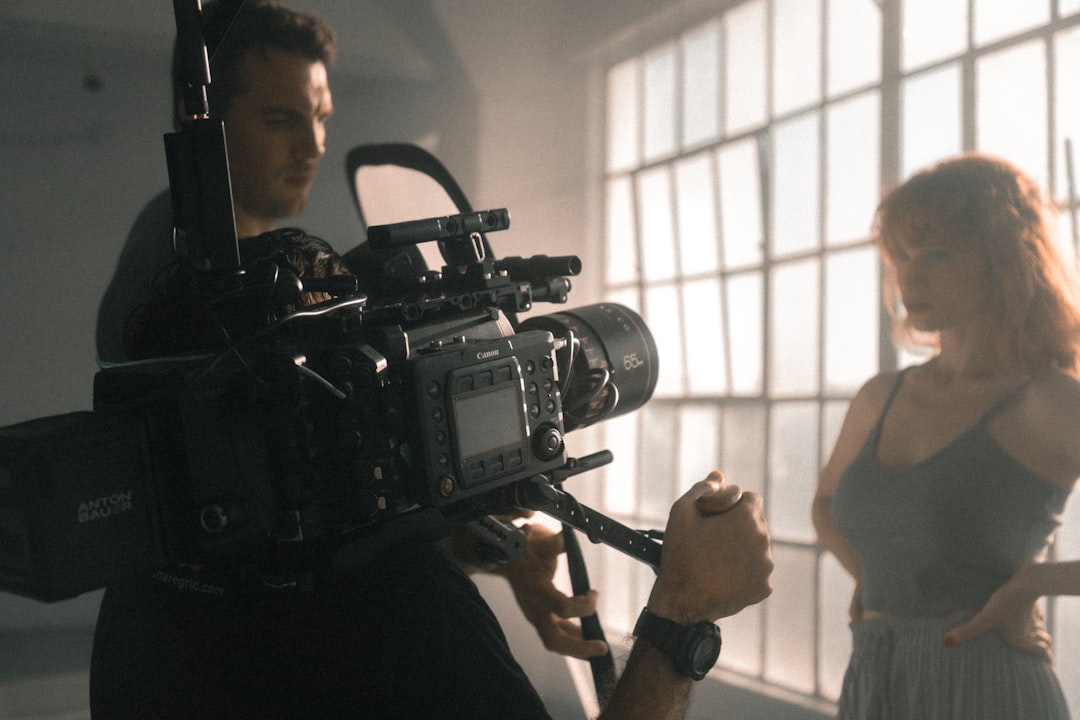
There is a moment that keeps circulating across social feeds in 2026 — Travis Kelce, the NFL tight end turned cultural phenomenon, visibly lighting up in the presence of Dolly Parton. It is the kind of unguarded, completely human reaction that no publicist could have scripted and no AI could have generated. As a filmmaker, the second I saw that clip, I stopped scrolling. Not because I follow football or because I track celebrity news as a hobby, but because that reaction — raw, joyful, almost childlike in its sincerity — is exactly the texture that independent cinema has been chasing for decades. And in the broader cultural context of 2026, where Kelce and Taylor Swift have just donated $26 million to charitable causes ahead of their wedding, including a landmark $1 million gift to a Rhode Island food bank that earned praise from Brad Paisley and Kimberly Williams-Paisley, that moment of authentic reaction becomes even more cinematically interesting.
The Power of the Unscripted Reaction in Documentary and Narrative Film
Let me be direct: the Travis Kelce reaction to Dolly Parton is a masterclass in what documentary filmmakers call a pure moment. It is the kind of footage that Frederick Wiseman built a career on, that the Maysles brothers immortalized in Grey Gardens, and that every vérité filmmaker is hunting every single time they press record. The reaction is not performed. It is not calculated for a camera. It is a human being meeting a legend and completely forgetting to be cool about it.
For narrative filmmakers, the lesson is equally potent. When we write scripts, we often reach for the dramatic reaction — the tear, the outburst, the confrontation. But Kelce's response to Parton reminds us that the most moving reactions are frequently the quietest and the most specific. A jaw that drops half an inch. A laugh that starts before the person even realizes they are laughing. These micro-expressions are the currency of great screen performance, and as directors, our job is to create the conditions where our actors can access them. That starts at the screenwriting tips stage — building characters with genuine interior lives, not just plot functions.
When I directed my second short feature, I spent three weeks in pre-production drilling dialogue only to discover on set that the best take of the entire shoot was one where my lead actor simply did not know I was still rolling. The camera — a Sony FX3 with a vintage Contax Zeiss 85mm — caught something the script could never have produced. That is the Kelce-Parton principle in practice.
Mining Celebrity Culture for Character Research
Independent filmmakers often dismiss celebrity culture as shallow source material, but that is a strategic mistake. The viral moment of Kelce reacting to Parton exists within an extraordinarily rich dramatic context. Here is a man at the absolute peak of public life — Super Bowl champion, fiancé of the world's biggest pop star, philanthropist donating tens of millions to food banks and community organizations — who still cannot contain his excitement at meeting a country music icon in her seventies. That tells you everything about how hero worship, legacy, and generational admiration function as real human experiences. Those are exactly the emotional dynamics that make for compelling characters on screen.
When you are developing characters for your next project, study these public moments the way a method actor studies real behavior. Watch how Kelce physically carries himself in that moment versus how he carries himself on a football field. The contrast is your character arc. The shift between public persona and private reaction is your dramatic engine.
The $26 Million Narrative: Philanthropy as Story Structure
The broader news context surrounding Kelce and Swift in 2026 is itself a story structure worth studying. They donate $26 million ahead of a wedding. Brad Paisley and Kimberly Williams-Paisley publicly thank them. A Rhode Island food bank receives $1 million. Each of these story beats follows classic three-act logic: establishment, escalation, and resonance. The philanthropy narrative gives the celebrity moment emotional weight. Without it, the Dolly Parton reaction is a cute clip. With it, the reaction becomes a window into a man who, despite astronomical wealth and fame, remains genuinely moved by American musical royalty. That is character depth. That is what separates a scene from a sequence.
Cinematography Lessons From Capturing Real Human Reactions
If you ever get the opportunity to capture genuine reactions — whether in documentary work, behind-the-scenes footage, or observational narrative filmmaking — your cinematography choices will determine whether the moment lands or disappears. The Kelce-Parton clip works visually because the camera is close enough to read his face but not so close that it becomes invasive. That balance is everything.
From a technical standpoint, capturing authentic reactions in 2026 requires a combination of preparation and restraint. I run a two-camera setup whenever possible during reactive moments — one locked wide on a tripod, one handheld at a medium focal length. My current go-to for handheld reactive work is the Blackmagic Cinema Camera 6K paired with a Sigma 35mm Art lens. The image is rich enough to handle aggressive color grading in DaVinci Resolve without falling apart, and the form factor is small enough that subjects forget it is there after about twenty minutes.
Sound is the element most indie filmmakers neglect in these situations. A genuine reaction that you cannot hear clearly is half a reaction. I use a Rode NTG5 on a boom whenever possible, with a DJI Mic 2 as a wireless backup clipped to talent. The redundancy has saved more than one irreplaceable take. For a deeper technical foundation on all of this, our cinematography basics guide covers the core principles that make reactive shooting work under real-world conditions.
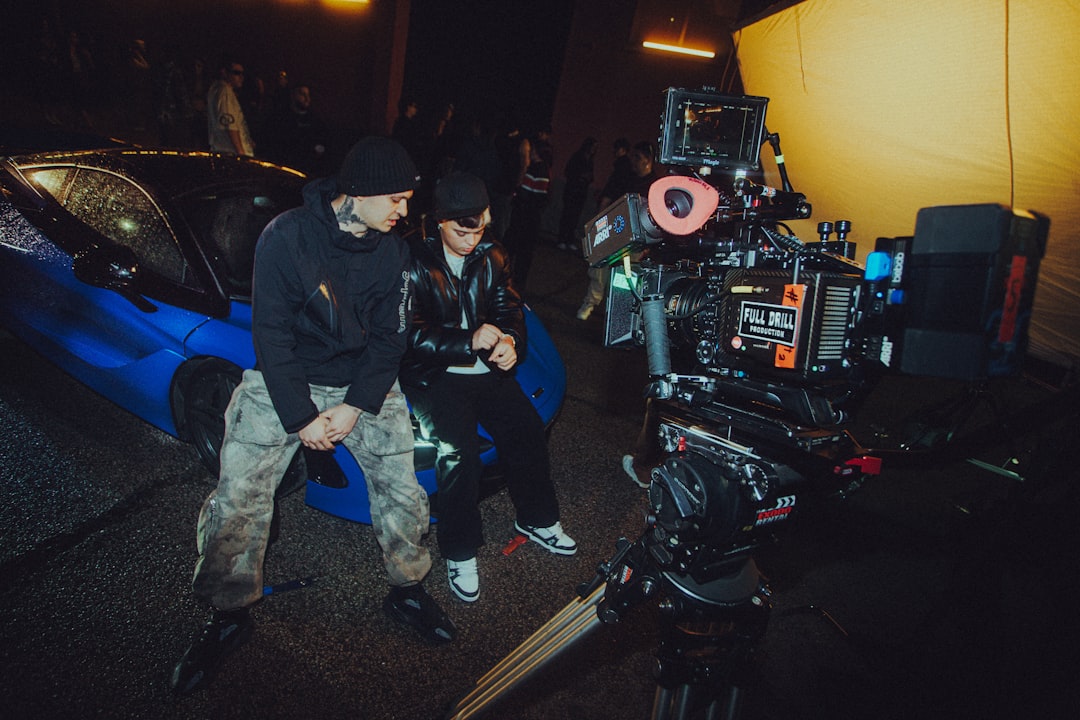
Photo by Oleg Brovchenko on Unsplash
What the Kelce-Parton Moment Means for Independent Film Production in 2026
Here is the practical production takeaway that I think gets overlooked in conversations about viral celebrity moments: the best documentary and narrative filmmakers in the independent space are not waiting for celebrities to generate their authentic moments. They are constructing the conditions for those moments within their own productions, with their own casts and subjects. The Kelce-Parton reaction is a reminder of what the goal looks like. Now the question is how you engineer your way toward it.
On the production side, this means rethinking your rehearsal process. Over-rehearsed scenes produce polished performances, not authentic ones. Directors like John Cassavetes, Andrea Arnold, and more recently Ti West have built entire aesthetic identities around finding the real inside the constructed. Their production methodologies — long improvisation sessions, minimal blocking, multiple camera configurations to catch what happens between the planned moments — are worth studying and adapting for micro-budget work.
It also means rethinking your production schedule. Authentic moments cannot be rushed. If you are shooting a ten-day feature on a $50,000 budget, build buffer time into your schedule specifically for the unplanned takes. The industry standard production approach covered in our film production guide will give you the scheduling framework to protect that creative space without blowing your budget.
Translating Cultural Virality Into Independent Film Strategy
There is a film business dimension to this conversation that deserves honest attention. In 2026, the independent film market is more competitive and more fractured than at any point in the medium's history. Streaming platforms are commissioning less, theatrical windows are consolidating, and the algorithm-driven attention economy means that films need entry points — cultural hooks — to find their audiences.
The Travis Kelce and Dolly Parton moment, embedded in the larger narrative of celebrity philanthropy and an impending high-profile wedding, generated millions of organic impressions within hours. Independent filmmakers who are paying attention to why certain moments travel — and the answer is almost always authentic human emotion captured with enough production quality to be shareable — can apply those same principles to their marketing and distribution strategy.
Trailers that feature genuine on-set reactions. Behind-the-scenes footage that shows real creative collaboration. Festival submission materials that lead with specific, emotionally precise moments rather than genre descriptors. These are the tools that translate cultural virality logic into independent film business strategy. The Kelce-Parton clip is not just a feel-good celebrity moment. For those of us in the filmmaking community, it is a case study in why authentic human reaction remains the most powerful and most portable unit of storytelling that exists. Capture it, protect it, and build your entire production philosophy around earning it. That is the work.