Severe Thunderstorm Warning on Set: How Indie Filmmakers Survive, Adapt, and Even Thrive When Storms Hit
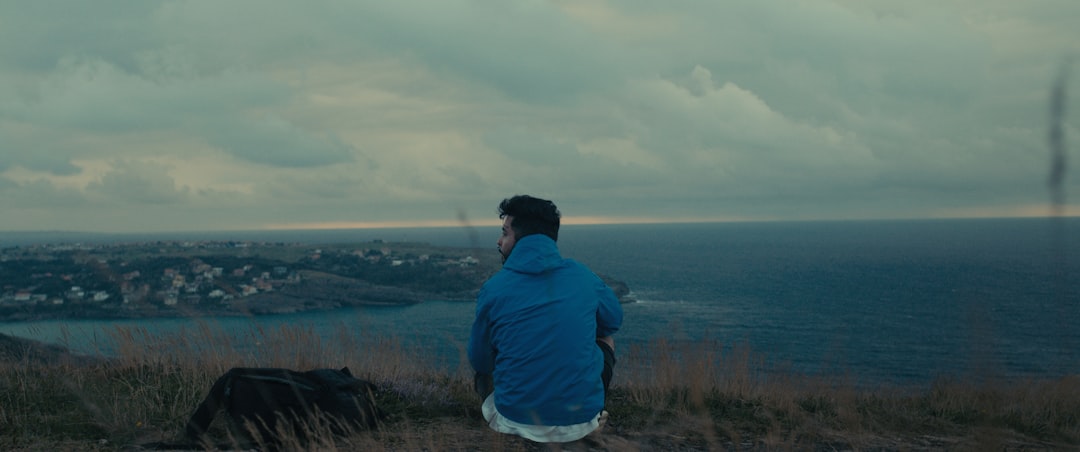
It happened to me on a Friday afternoon in the middle of what should have been our most productive exterior shooting day. We were two weeks into a micro-budget feature outside Milwaukee — rolling hills, golden fields, the kind of backdrop you can't manufacture in post — when the National Weather Service dropped a severe thunderstorm warning across all of southeastern Wisconsin. Within forty minutes, the sky went from overcast to genuinely terrifying. Hail the size of marbles. Wind that knocked over our C-stand rig. A crew of twelve standing around a cargo van asking me what the plan was. I didn't have a great answer. That experience fundamentally changed how I approach production planning, and if you shoot exteriors with any regularity, it should change yours too.
Understanding What a Severe Thunderstorm Warning Actually Means for Your Production
There is a meaningful difference between a severe thunderstorm watch and a severe thunderstorm warning, and every producer, AD, and director of photography on an indie set needs to understand that distinction cold. A watch means conditions are favorable for severe storms to develop — you have time to prepare and make decisions. A warning means the storm has been detected by radar or confirmed by spotters and is imminent or already occurring. When a warning drops, the time for deliberation is over. You move.
The National Weather Service defines a severe thunderstorm as one producing winds of 58 mph or greater, hail one inch in diameter or larger, or a tornado. Any one of those three conditions is enough to destroy a shooting day. All three together — which is exactly what parts of southern Wisconsin saw during the storm system that swept through the region in 2026 — can destroy equipment, injure crew, and expose a production to serious liability. I have seen producers try to push through weather warnings to preserve a shooting day, and I have never once seen it go well.
The good news — and there genuinely is good news here — is that severe weather is predictable enough, and indie film production is flexible enough, that you can build a workflow that absorbs storm disruptions without catastrophic loss. It requires forethought, the right gear, and a production culture that treats crew safety as non-negotiable. Check out our comprehensive film production guide for a broader framework on building resilient shoot schedules that account for weather and other variables.
Pre-Production Weather Planning: The Tools and Habits That Actually Help
Most indie productions do not invest nearly enough time in weather contingency planning during pre-production. It gets treated as an afterthought — something you deal with if it comes up. But if you are shooting exteriors anywhere in the Midwest, the Gulf South, the Atlantic seaboard, or really anywhere with dynamic seasonal weather, you need a formal weather protocol written into your production plan before day one of principal photography.
Weather Apps and Services Worth Paying For
The free weather apps on your phone are not sufficient for production planning. I have been using Tomorrow.io — formerly ClimaCell — for several years now, and the hyperlocal precision it offers is genuinely valuable when you are trying to decide whether a specific location will be clear during a two-hour shooting window. Dark Sky's data, now folded into Apple Weather, offers minute-by-minute precipitation probability that can help you thread weather gaps on marginal days. For serious productions with significant location budgets at stake, subscribing to a professional meteorological service like The Weather Company's producer-tier API access is worth the cost. DTN, which serves agricultural and aviation industries, also offers highly localized severe weather alerting that you can configure for specific GPS coordinates — your exact shooting location, not just the nearest city.
Beyond apps, build a relationship with a local meteorologist in your shooting region. Many television weather reporters are genuinely passionate about what they do and will give you a surprisingly detailed consult for free if you reach out professionally. When we were prepping a production in Wisconsin, the chief meteorologist at a Green Bay station spent thirty minutes on the phone walking me through the regional storm patterns specific to Lake Michigan's influence on southeastern Wisconsin weather. That conversation directly informed our shooting schedule.
Building the Weather Contingency into Your Schedule
Every exterior-heavy shooting day needs a documented weather hold protocol. This means identifying in advance which scenes can pivot to interior coverage, which shots can be rescheduled within the shooting block without breaking the budget, and at what specific weather threshold you call the day. Do not wait until you are staring at a green sky to have that conversation with your AD. Write the thresholds into the call sheet: sustained winds above 35 mph, active lightning within ten miles, radar-confirmed precipitation within thirty minutes of location — whatever parameters fit your production. Then stick to them. The pressure to push through will always be there. The protocol is what protects you from that pressure.
Photo by Ayrus Hill on Unsplash
Protecting Your Gear When a Severe Thunderstorm Warning Drops Mid-Shoot
Camera gear is the most immediate concern when weather turns severe, and the hierarchy of protection decisions matters. Your crew's physical safety comes first — full stop, no debate. But assuming you have gotten your people to safety, your gear protection strategy should be practiced, not improvised.
I have been shooting with Sony FX series cameras for the past several years, and while the FX6 and FX9 both carry weather sealing, I would not trust any cinema camera's sealing under the kind of rainfall rates that accompany a genuine severe thunderstorm warning. Production-grade rain covers from companies like PortaBrace or Kata — now largely absorbed into Manfrotto's accessories line — are worth having in the camera truck for every exterior day, period. For anamorphic lenses, which tend to have more exposure points, I add a secondary layer with a simple shower cap arrangement over the matte box as a first-line defense while we work to get the rig under cover.
Sound gear is often more vulnerable than camera systems because it is typically more dispersed across a location. Boom operators are out in the open, wireless receivers are clipped to director's chairs and monitor stations, and lavs are threaded under talent's clothing. Establish a designated gear rally point at the beginning of every exterior shoot day — a specific vehicle or structure where everything converges when weather turns. The sound mixer should have a clear protocol for emergency breakdown that gets critical electronics into Pelican cases within a defined window. On our Wisconsin shoot, our sound mixer had a laminated checklist zip-tied to his cart. It saved us probably $8,000 in gear on that Friday afternoon.
For cinematographers looking to deepen their understanding of how weather affects exposure, lens choice, and overall visual strategy, our cinematography basics section covers the foundational principles that apply whether you are working in clear conditions or navigating the chaos of changing weather mid-shoot.
Turning Severe Weather Into a Creative Asset
Here is the part that took me the longest to genuinely internalize: severe weather is not purely an obstacle. Some of the most visually arresting footage I have ever captured came from storm days — the quality of light during the minutes before a major system arrives is unlike anything you can manufacture artificially. That green-grey sky. The way shadows disappear and contrast flattens. The kinetic energy of wind in tall grass or tree canopies. These are textures that communicate something to an audience at a register beneath conscious thought.
The practical question is how you capture that safely. There are a few answers. First, the approach window before a severe thunderstorm warning is often thirty to sixty minutes — sometimes more if you are tracking a system carefully. That window, properly managed, can be intensely productive. Some of the storm approach footage I shot during our Wisconsin production ended up in the film's most emotionally effective sequence. We were packed and sheltered before the warning was officially issued, but we had those minutes of approach light locked in the can.
Second, consider the storm's aftermath. Post-storm light — particularly the hour following a major system — can be extraordinary. Washed streets, clearing clouds with dramatic backlight, the physical evidence of weather written across a landscape. If your script has any room for that visual language, building post-storm shooting windows into your schedule is a legitimate creative strategy. This ties directly into the kinds of environment-driven storytelling choices that separate memorable indie work from generic execution. For deeper thinking on how weather and environment can inform narrative choices at the script level, our screenwriting tips resource covers how to build environmental specificity into your pages from the ground up.
The Business Side: Insurance, Liability, and Weather Delays
No article about severe weather on a film set is complete without a frank conversation about the financial and legal dimensions. Production insurance — specifically cast insurance, negative insurance, and weather delay riders — exists precisely for situations where a severe thunderstorm warning or similar event disrupts your schedule. But too many indie productions, particularly those in the micro-budget range under $500,000, skip weather delay coverage because of premium costs and then absorb devastating losses when weather strikes.
In 2026, with extreme weather events becoming more frequent and more severe across nearly every region of the country, that calculus has shifted. Talk to your entertainment insurance broker — Front Row, DeWitt Stern, and Near North are the names that come up most often in indie production circles — specifically about weather delay riders before you go into production on any exterior-heavy project. Get the actual numbers. In most cases, the premium delta is smaller than productions assume, and the exposure without coverage is enormous.
Liability is the other dimension. If a crew member is injured because a producer pushed through a severe thunderstorm warning to preserve a shooting day, the production's exposure is significant and largely indefensible. Document your weather protocols, document the conditions that triggered your hold decisions, and make sure your AD is logging weather events the same way they log any other production variable. That documentation is your protection.
Severe weather is a permanent feature of exterior filmmaking. The severe thunderstorm warnings that rolled through southeastern Wisconsin are a reminder that nature does not negotiate with your shooting schedule. But productions that treat weather as a managed variable — with the right protocols, the right gear strategy, the right insurance, and even a creative openness to what storms can offer visually — will consistently outperform those that treat it as an intrusion. Build the plan in pre-production. Execute it without hesitation when conditions demand it. And keep your eyes open during those extraordinary minutes when the sky turns colors you cannot recreate on any stage anywhere.