Robbie Moffat On AI, Independent Film And Putting Imagination Back Before Budget
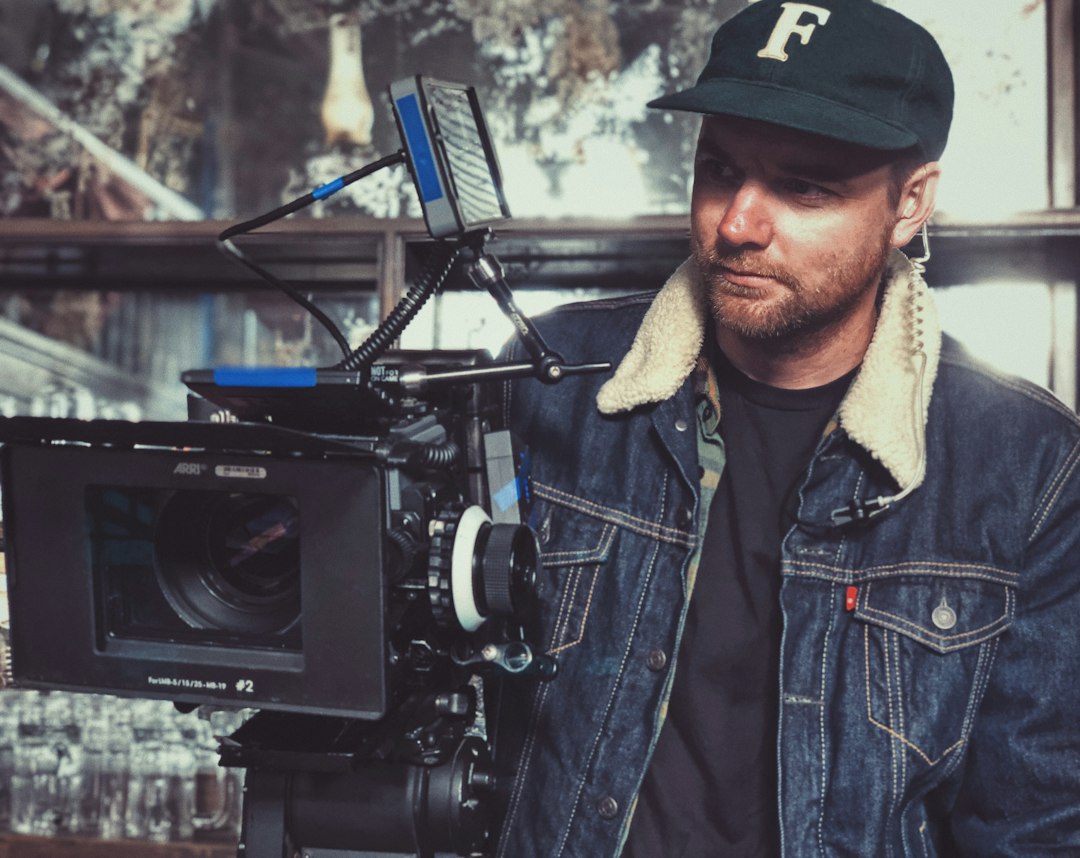
There are filmmakers who talk about making movies, and then there are filmmakers who just keep making them — regardless of market conditions, technological disruption, or the ever-shrinking pool of traditional financing. Robbie Moffat falls firmly into the second category. The Scottish writer-director, producer, and multi-hyphenate creative force behind a catalogue that spans continents and genres has been working at the coalface of independent cinema long enough to have seen every supposed revolution come and go. But when the conversation turns to artificial intelligence and what it means for independent film in 2026, Moffat doesn't dismiss it or worship it. He does something rarer: he contextualizes it with the kind of hard-won, on-the-ground clarity that only comes from decades of actually getting films made.
The Philosophy Behind the Filmmaker
Moffat's core argument — one he has articulated across interviews, panels, and his own productions — is deceptively simple: imagination must come before budget, not after it. It sounds obvious until you realize how thoroughly the independent film world has inverted that principle. Too often, emerging filmmakers build their creative vision around what they think they can afford, trimming ambition to fit available resources before a single word hits the page. The result is a field full of competent, cautious films that never truly ignite.
For Moffat, the process starts with the idea in its purest, most uncompromised form. You write the story you need to tell. Then you figure out how to tell it with the resources you have. This isn't naivete — it's a discipline. It forces filmmakers to find creative solutions rather than financial ones, to interrogate every scene and ask whether the emotional truth can be communicated through performance, framing, or sound design rather than production value. It's the difference between cinematography that serves the story and cinematography that compensates for the lack of one.
That philosophy has never been more relevant than it is right now, in a landscape where AI tools are simultaneously democratizing production and threatening to reduce filmmaking to a series of automated prompts. Moffat has been watching this shift closely, and his perspective cuts through the noise in ways that should matter to anyone trying to build a sustainable career in independent film.
How Moffat Sees AI Reshaping Independent Production
The conversation around AI in filmmaking in 2026 has fractured into two opposing camps. On one side are the maximalists who believe generative video tools — Sora, Runway Gen-3, Kling, and their successors — will eventually replace traditional production pipelines entirely. On the other are the purists who see AI as an existential threat to the craft and the livelihoods of the crews who sustain it. Moffat occupies neither extreme, and his reasoning is worth unpacking.
His position is essentially pragmatic: AI is a tool, and tools are only as good as the vision directing them. What concerns him isn't the technology itself but the culture forming around it — a culture in which the shortcut becomes the destination. When a first-time filmmaker can generate a photorealistic establishing shot of a Nairobi street market without ever booking a flight, the temptation is to let that capability define the scope of the story rather than simply serve it. That inversion — technology leading imagination rather than following it — is, in Moffat's view, the real danger.
But he is equally clear-eyed about the genuine opportunities. For micro-budget productions operating outside the studio system, AI-assisted workflows are already changing what's possible. Visual effects that would have required a post-production house and a five-figure invoice can now be handled in-house using tools like Adobe Firefly, DaVinci Resolve's AI features, and emerging platforms built specifically for the indie market. Pre-visualization, once the exclusive domain of productions with dedicated pre-vis teams, is now accessible to a director working from a laptop. For a filmmaker like Moffat — who has consistently delivered productions on budgets that would make most studio executives laugh — these capabilities are genuinely liberating.
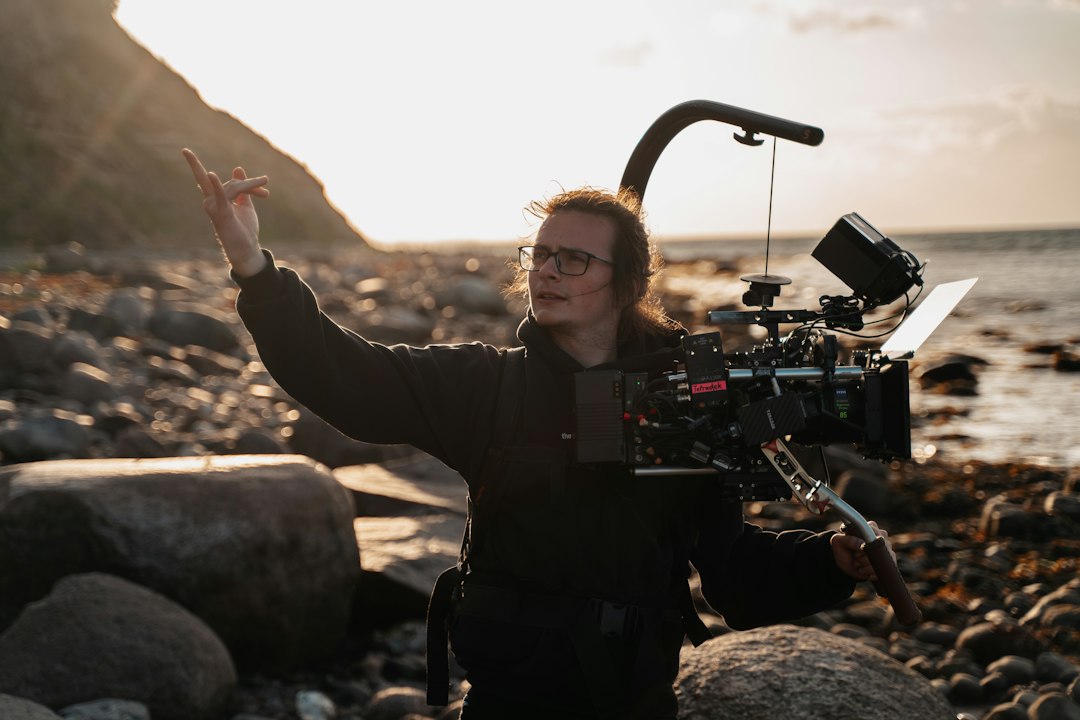
Photo by Johannes Blenke on Unsplash
The Business Reality for Independent Filmmakers in 2026
Financing Has Changed — But the Fundamentals Haven't
One of the most valuable aspects of Moffat's perspective is his refusal to separate the creative from the commercial. He understands, as any working independent filmmaker must, that a film that doesn't get finished doesn't get seen. The financing landscape for independent productions in 2026 is genuinely complex — traditional broadcast pre-sales have contracted, streaming platform acquisition budgets have tightened following years of oversupply, and private equity money that flooded into independent film has largely retreated to safer harbors. Yet Moffat's output has not slowed. That's not luck. That's the result of building a production model that doesn't depend on any single financing mechanism.
His approach mirrors what the most resilient independent producers have always done: understanding what a producer actually does at a fundamental level — not just raising money, but structuring a film in a way that manages risk, creates multiple revenue pathways, and keeps creative control intact. In practice, that means working with local crews and locations to unlock regional production incentives, co-producing across territories to access multiple funding bodies, and developing projects with built-in genre appeal that speaks to specific audience communities rather than chasing a theoretical mainstream market.
Distribution in an Era of Fragmentation
Moffat is direct about the distribution challenge, which he sees as the most significant structural problem facing independent filmmakers right now — more disruptive, in his view, than anything AI is doing to production. The aggregator model has made it easier than ever to place a film on a streaming platform; it has simultaneously made it nearly impossible to find an audience once you're there. A film buried in a platform's catalogue with no algorithmic support and no marketing budget is, for practical purposes, invisible.
His recommendation for independent filmmakers wrestling with how film distribution works in 2026 is to build the audience relationship before the film is finished — not as a marketing exercise but as a creative one. The communities that care about the story you're telling should be involved in some form long before a distribution deal is signed. This might mean developing an audience through short-form content, building around a subject or genre with an existing passionate following, or structuring the film around talent with genuine social reach independent of their box office profile. None of this is new advice, but Moffat's framing of it — as a creative strategy rather than a marketing one — gives it renewed urgency.
What Emerging Filmmakers Can Take From Moffat's Approach
There is something almost countercultural about insisting, in 2026, that the most powerful thing a filmmaker can do is slow down and commit to a great idea before reaching for a camera or an AI interface. The entire technology ecosystem surrounding independent film is oriented toward speed — faster pre-visualization, faster VFX, faster editing workflows, faster distribution to market. Moffat's implicit challenge is to ask what all that speed is actually serving.
The practical lessons embedded in his philosophy are transferable regardless of budget level or experience. First: develop your script beyond the point where it feels done. The version that feels finished is almost never the version that's ready. Second: understand your locations not as budget variables but as storytelling assets. Some of the most visually distinctive work in independent cinema of the last decade has come from filmmakers who committed to specific, unusual places and let those places reshape the story. Third: build your crew relationships before you need them. The independent film world runs on trust and reciprocity in ways that the studio world doesn't, and a cinematographer or sound recordist who believes in the project will solve problems that no budget line can anticipate.
On the AI question specifically, Moffat's guidance is essentially this: learn the tools well enough to know what they can and cannot do, use them where they genuinely serve the story, and never let their capabilities set the ceiling on your imagination. A filmmaker who builds a script around what Runway or Sora can generate is working backwards. A filmmaker who uses those same tools to realize a vision that couldn't otherwise be achieved on their budget is working exactly as they should be.
In a moment when the independent film conversation is dominated by either techno-optimism or existential anxiety, Robbie Moffat's insistence on the primacy of imagination is bracing in the best possible way. The tools will keep changing. The story — told with honesty, specificity, and creative courage — is what will last.