What Naomi Osaka's Grass Court Breakthrough Can Teach Independent Filmmakers About Resilience and Reinvention
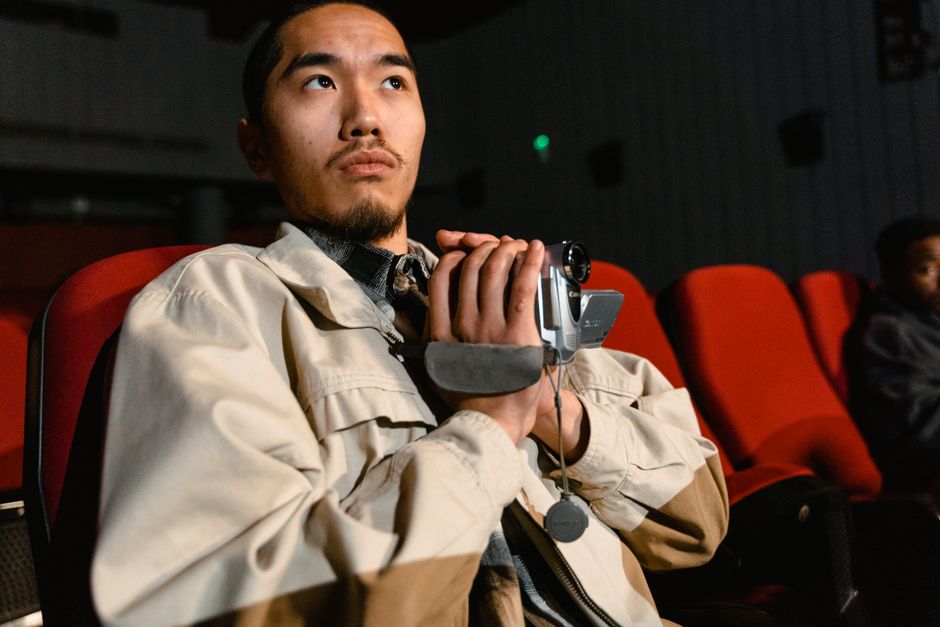
When Naomi Osaka walked onto the grass courts of Bad Homburg in 2026 and reached her first-ever grass court final alongside Karolina Muchova, most of the tennis world treated it as a sports headline. I saw something else entirely. I saw a document about reinvention — a living, breathing case study in what it takes to rebuild your craft after public setbacks, personal doubt, and years of inconsistent results. As someone who has spent the better part of two decades shooting on everything from a battered Canon XL2 to a RED Monstro, and who has watched countless talented filmmakers flame out or disappear after a single bad project, Osaka's story reads like the most honest filmmaker biography I've never seen produced. It deserves more than a sports column. It deserves a serious conversation about what resilience actually looks like in a creative career.
The Grass Court Problem: When Your Medium Fights Back
Grass has always been Osaka's least comfortable surface. It's unpredictable, it rewards a different kind of footwork, and it punishes players who rely on the same aggressive baseline game that made them champions on hard courts. Sound familiar? For indie filmmakers, switching from your comfort zone — say, handheld documentary work on a Sony FX3 — to a fully scripted narrative feature with a proper grip department and color-graded pipeline is the professional equivalent of moving from hard court to grass. The rules aren't entirely different, but the margin for error shrinks dramatically, and what worked before suddenly feels clumsy.
Osaka didn't abandon her core identity to succeed on grass. She adapted it. She refined her serve timing, adjusted her movement, and trusted the fundamentals she had spent years building. That's the exact discipline I try to apply when I move between formats. The cinematography principles I learned shooting guerrilla-style short films in parking garages with a Blackmagic Pocket 4K don't disappear when I'm on a larger set — they sharpen. The constraint-born creativity of early indie work is a foundation, not a ceiling. If you're looking to understand how those fundamentals transfer across formats, our cinematography basics guide breaks down the transferable skills that matter most regardless of budget or surface.
Adapting Without Losing Your Voice
One of the most dangerous traps for an indie filmmaker getting their first real budget is the temptation to imitate. You suddenly have a camera package you've only dreamed about — maybe an ARRI ALEXA 35 or a Panavision anamorphic set — and the instinct is to shoot like whoever you've been studying on Blu-ray. Osaka could have completely dismantled her game and tried to play like a grass specialist. She didn't. She played like Osaka on grass. The Wimbledon warning her recent performances are sending is not that she has become someone new — it's that she has become a more complete version of herself. That distinction matters enormously for any filmmaker staring down a production that feels bigger than their experience.
Public Failure and the Myth of the Clean Comeback
Let's be honest about something the sports media tends to sand down: Osaka's path back has not been clean. There were early exits, there were tears, there were conversations about mental health that the tennis establishment handled with varying degrees of grace. There was a baby. There was an extended absence. The comeback narrative in sports — and in film — loves to compress all of that into a tidy before-and-after montage. Real careers don't work that way, and pretending they do is genuinely harmful to working filmmakers trying to understand what a sustainable creative life looks like.
I've seen brilliant directors — people whose short films absolutely demolished festivals — go silent for three or four years after a first feature fell apart in post-production or failed to secure distribution. The silence looks like failure from the outside. From the inside, it's often the most productive period of a filmmaker's life: retooling the script approach, rebuilding the producing relationship, learning the business side of the industry that film school never adequately addressed. Our film production guide covers the structural realities that catch first-time feature directors off guard, because understanding the system is part of surviving it.
Photo by Paul Lichtblau on Pexels
The Business of Being Underestimated
There is a specific kind of freedom that comes with being underestimated, and Osaka has clearly learned to weaponize it. Walking into Bad Homburg without the pressure of being the dominant grass court favorite gave her permission to play loose, to experiment, to take risks she might have suppressed under the weight of expectation. Independent filmmakers exist in this space constantly. You don't have a studio breathing down your neck. You don't have a marketing department insisting on a safer third act. That creative latitude is simultaneously your greatest vulnerability and your most powerful competitive advantage. The question is whether you treat it like an obstacle or a resource.
I've made three feature films with budgets under $200,000, and the creative decisions I'm most proud of — a single-take argument scene shot entirely on natural light through venetian blinds, a score built from field recordings made in an auto salvage yard — happened precisely because no one with authority over the project told me I couldn't do them. Osaka's willingness to serve and volley on grass, a tactical choice that felt risky for her game, is the equivalent of those moments. You earn the right to take those swings by doing the preparation work so thoroughly that the risk becomes calculated rather than reckless.
Screenwriting the Comeback Story: Structure as Survival
There's a screenplay buried inside Osaka's 2026 grass court run, and as a story structure exercise it's genuinely instructive. Think about the classic three-act architecture: Act One establishes the world and the wound. For Osaka, that's the dominant hard court champion who has never cracked the grass code, carrying the additional weight of a very public struggle with mental health and a career interrupted by motherhood. Act Two is the grinding middle — the adaptation, the doubt, the incremental progress that looks like stagnation until suddenly it doesn't. Act Three is Bad Homburg: the first final, the Wimbledon warning shots, the sense that something larger is beginning.
What makes this structure resonate is that the protagonist's internal journey — learning to trust a rebuilt version of herself — maps precisely onto the external plot. That alignment between inner and outer story is what separates a compelling screenplay from a competent one. If you're working on a character-driven script and struggling to make the external stakes feel emotionally urgent, it's almost always because the internal arc hasn't been fully developed. The practical techniques for solving that problem are exactly what we dig into in our screenwriting tips resource, which I'd strongly recommend for anyone drafting a comeback or redemption narrative in 2026.
The Osaka story also demonstrates the power of a clearly articulated antagonist that isn't a person. The grass surface itself functions as the antagonist — indifferent, unforgiving, testing the protagonist not with malice but with pure resistance. Some of the strongest independent films of the last decade have employed exactly this structure: the environment as the pressure that reveals character. Think about the way desert heat functions in certain survival films, or the way institutional bureaucracy operates in social realist drama. The antagonist doesn't need a face. It needs to be real, specific, and genuinely difficult to overcome.
Practical Takeaways for the Working Indie Filmmaker
Let me be direct about what I think filmmakers can actually extract from Osaka's 2026 run, beyond the inspirational framing. First: specialize deeply before you diversify. Osaka built an elite hard court game before attempting to translate it to grass. Too many indie filmmakers try to work across every format — documentary, narrative, commercial, music video — without developing genuine mastery in any single discipline. The versatility comes later and more easily when it's built on a real foundation.
Second: manage your competitive context deliberately. Osaka chose Bad Homburg, a high-quality but lower-pressure event, as the right testing ground before Wimbledon. Indie filmmakers should think similarly about festival strategy. A film that might struggle to break through at Sundance or SXSW could absolutely dominate a mid-tier regional festival, build word-of-mouth, attract distribution attention, and enter the major circuit with genuine momentum behind it. Choosing the right first audience for your work is a strategic decision, not a consolation prize.
Third: take your mental health infrastructure as seriously as your gear budget. Osaka has been publicly vocal about the cost of ignoring psychological wellbeing in high-performance environments. Filmmaking — especially indie filmmaking, where you are frequently writer, director, producer, and de facto therapist for your entire crew — is a high-performance environment. Build the support structures before you need them, not after you've already burned out on a project that was supposed to be your breakthrough.
Finally, understand that the Wimbledon warning Osaka is sending her opponents in 2026 is not about one good tournament. It's about a complete athlete who has done the hard, unglamorous work of rebuilding herself from the inside out. The most resonant films I've ever encountered were made by people in exactly that condition: not at their flashiest or their most commercially primed, but at their most fully developed. That's the target worth aiming for. Everything else — the festival circuit, the distribution deal, the next budget level — follows from it.