The Lincoln Memorial Reflecting Pool Scandal Is the Best Unscripted Film of 2026
When Reality Writes the Script Better Than You Can
I've been making and covering independent films for nearly two decades, and I can tell you with complete sincerity: nothing I've read in a screenplay submission this year has gripped me the way the Lincoln Memorial Reflecting Pool story has. A 350-foot gash, allegedly cut with a sharp knife or razor according to the National Park Service. A journalist hunting for that cut on national television. A White House that decided to go to war with that same reporter rather than answer a straightforward question. And then — the coup de grâce — a Washington Post column suggesting the Reflecting Pool deserves an Emmy. At that point, the story stopped being news and became cinema. If you're a filmmaker and you're not paying attention to this, you're missing a masterclass in dramatic structure, visual symbolism, and the raw power of a single, iconic location.
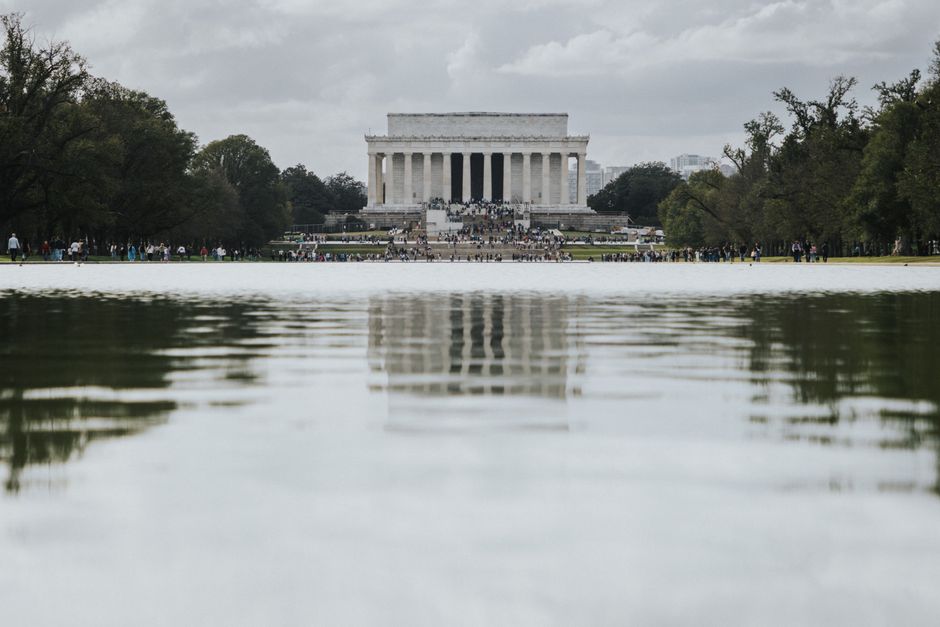
The lincoln memorial reflecting pool has served as one of American cinema's most enduring backdrops. From Forrest Gump wading through it in 1994 to countless documentary establishing shots that use its mirror-like surface to suggest truth, transparency, and national identity, the pool carries an enormous symbolic weight per square foot. So when someone allegedly takes a razor to its liner — slashing nearly the length of three football fields — the act itself becomes loaded with narrative meaning that any screenwriter worth their Final Draft license would kill to manufacture artificially. This one arrived fully formed, free of charge, courtesy of real life.
The Anatomy of a Perfect Inciting Incident
Let's break this down the way I'd break down a screenplay in a notes session. Your inciting incident needs to do three things: disrupt an established order, introduce irreversible stakes, and force your protagonist into action. The Reflecting Pool vandalism does all three with surgical precision — ironic, given it was apparently committed with a blade.
The established order is the National Mall itself — arguably the most symbolically protected public space in the United States. The stakes are both literal (a multi-million dollar repair to a historic landmark) and figurative (what does it mean when the mirror that reflects American democracy gets deliberately cracked?). And the protagonist forced into action? In this case, it's not one hero but several: the National Park Service investigators, the journalist who decided to physically walk the perimeter looking for the cut, and, unexpectedly, the White House communications operation that chose confrontation over transparency. Every one of those is a compelling point-of-view character. Every one of those is a documentary waiting to happen.
If you want to sharpen your own instincts for building inciting incidents with this kind of layered resonance, the screenwriting tips we've compiled at FilmFuse are a strong starting point. But what this story illustrates better than any craft article can is that great inciting incidents feel inevitable in retrospect. Of course someone would slash the Reflecting Pool liner. Of course a reporter would go looking for proof. Of course the White House would overreact. Each domino placement feels preordained once you see it fall.
Visual Symbolism You Cannot Buy in Post
As a cinematographer — and I've shot enough documentary work to have strong opinions here — the Reflecting Pool is a location that does half your compositional work for you. The doubling effect, the long horizontal axis stretching toward the Lincoln Memorial, the way light breaks across that still surface in the early morning hours — it's a DP's dream. The Sony FX6 paired with a Sigma 35mm Art lens at golden hour will make that location look like it was lit by a gaffer with a $500,000 budget. It practically lights itself.
But here's what the vandalism story adds that pure aesthetic beauty cannot: tension beneath the surface. Literally. The liner — the thing that holds all that symbolic water in place — has been compromised. There is now a wound underneath the image. For any documentary filmmaker approaching this material, that's not just a news hook. That's your entire visual metaphor, pre-installed. You don't have to manufacture irony in the edit bay. It's baked into the location itself.
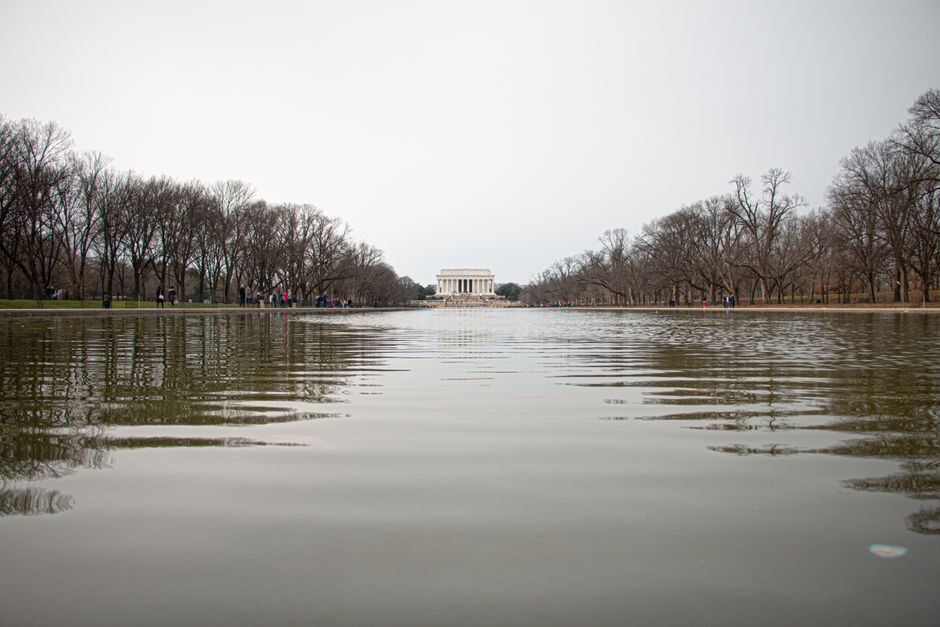
Photo by Sachith Ravishka Kodikara on Pexels
The Reporter Sequence: A Three-Act Scene in Real Time
The subplot involving the journalist who attempted to physically locate the 350-foot cut — and the White House's aggressive response to that reporting — is the kind of scene that gets lifted wholesale into prestige drama. Think of the best moments in All the President's Men or, more recently, She Said. The reporter as protagonist archetype works because the audience experiences investigation and discovery in real time alongside the character. We don't know more than they do. The tension is procedural and genuine.
What makes the Reflecting Pool reporter sequence particularly cinematic is the absurdity layered beneath the seriousness. The image of a journalist walking the edge of a 2,000-foot-long reflecting pool, peering at the water, looking for a razor cut — that's a Wes Anderson composition if I've ever heard one. Symmetrical, slightly surreal, deeply American. If I were producing this as a short documentary, I'd want a locked-off wide shot from the Lincoln Memorial steps, watching that tiny figure traverse the full length of the pool. No narration. Just the walk. The shot tells you everything about the story's absurdity and its gravity simultaneously.
What This Teaches Us About Location Scouting and Narrative Weight
Independent filmmakers spend enormous energy finding locations that carry inherent dramatic weight — places where something feels like it has happened or will happen. We drive hours, we pay location fees we can't afford, we negotiate with parks departments and city councils. And then a story like this reminds us that the most powerful locations in American filmmaking are the ones already saturated with collective memory.
The Lincoln Memorial Reflecting Pool doesn't need set dressing. It doesn't need production design. Its history — the March on Washington, the Vietnam Veterans Memorial dedication, the countless protests and vigils staged along its banks — does the work that a $200-per-day art department cannot replicate. For documentary filmmakers especially, returning to these locations with fresh story contexts is one of the most cost-effective narrative strategies available. A location with a hundred years of accumulated meaning is a force multiplier for whatever story you're telling on top of it. Check our film production guide for deeper guidance on how to leverage historically significant locations without breaking your budget.
The Emmy Comment and What It Says About 2026 Storytelling
When a mainstream columnist suggests the Reflecting Pool deserves an Emmy, they're making a joke — but they're also making a serious observation about the state of storytelling in 2026. The line between documentary, narrative fiction, and live political theater has essentially dissolved. We are all watching real events with the grammar of serialized television: cliffhangers, episode breaks, unexpected character turns, and social media commentary tracks running simultaneously.
For independent filmmakers, this presents both a challenge and an extraordinary opportunity. The challenge is standing out when reality itself is producing Emmy-caliber content. The opportunity is that audiences are more primed for documentary and hybrid narrative formats than at any point in film history. They know how to watch these stories. They understand the grammar. They're hungry for the kind of deep, textured investigation of real events that only independent documentary filmmakers can provide — because we're not beholden to network notes, and we're not trying to wrap everything up in forty-four minutes with commercials.
The Reflecting Pool story isn't over. The liner needs to be repaired. The investigation is ongoing. The political fallout is still reverberating. Any documentary filmmaker who locked in access to this story in the first seventy-two hours has the beginning of something genuinely important — a meditation on symbolic national spaces, institutional trust, press freedom, and the strange, specific texture of American political life in 2026. That's not a niche audience film. That's a Sundance film. That's a streaming acquisition. That's a career-maker for the right filmmaker with the right access and the right eye.
Understanding the technical side of capturing a location like this — the exposure challenges of a large reflective water surface, the polarizer work required to cut glare without losing the mirror effect, the focal length choices that either flatten or dramatize the pool's extraordinary length — is essential craft preparation. Our guide to cinematography basics covers the foundational techniques you'll want to have locked before you set foot on the National Mall with a camera.
The Bigger Lesson: Stay Alert to the World as Your Story Room
I'll close with something I tell every filmmaker I mentor: your story room is not just the writers room, not just the location scout's van, not just the pitch meeting. Your story room is the entire world, running twenty-four hours a day, generating inciting incidents and three-act structures and thematic resonance faster than any team of writers can manufacture them. The Lincoln Memorial Reflecting Pool — slashed, investigated, politicized, and nominated for an Emmy by a columnist who was only half-joking — is proof of that principle in 2026.
Pay attention. Take notes. Charge your batteries and update your media cards. The best documentary you'll ever make might be sitting at the bottom of a 350-foot razor cut in a reflecting pool in Washington, D.C., waiting for someone with a camera and the courage to go looking for it.