The Jannik Sinner Playbook: What Independent Filmmakers Can Learn From a Champion's Mindset
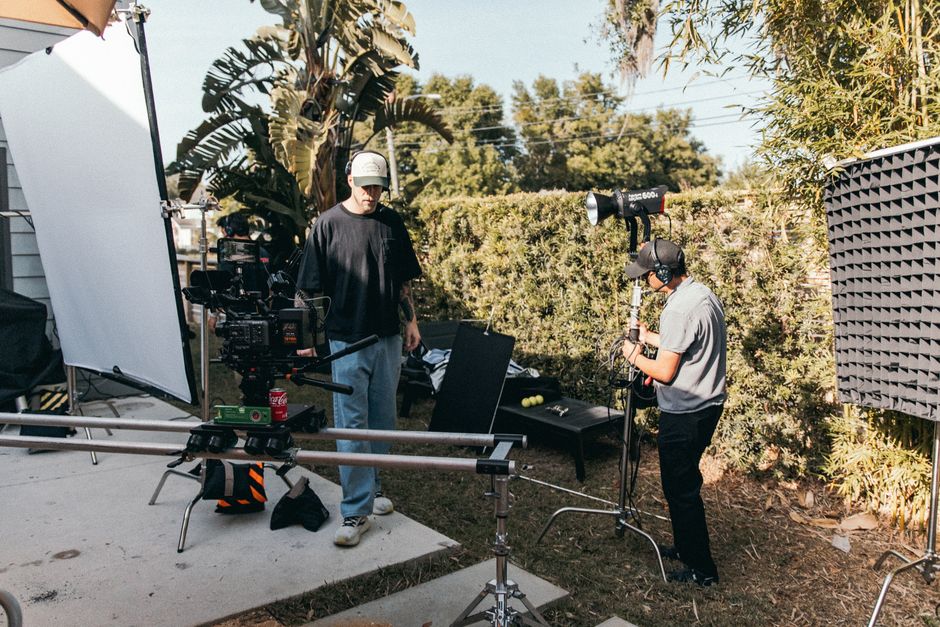
I was sitting in my edit suite last week, buried in a rough cut that simply refused to cooperate, when a colleague texted me a link to Jannik Sinner's match against Brooksby at Wimbledon 2026. Sinner had just won in three sets, advancing to the round of sixteen with the kind of measured, relentless precision that makes the rest of the sporting world stop and pay attention. I watched the highlights, then went straight back to my timeline — and I realized I was approaching my edit completely wrong. The Italian tennis phenomenon, currently carving through the Wimbledon draw like a surgeon, has something urgent to teach every independent filmmaker, screenwriter, and cinematographer willing to pay attention. His game is not about flash. It is about process, adaptation, and an almost monastic commitment to craft. Sound familiar?
Process Over Flash: How Sinner's Baseline Discipline Mirrors the Filmmaker's Craft
Watch Jannik Sinner play and you will notice something that sets him apart from the more theatrical players on the circuit. He does not live for the spectacular winner. He constructs points methodically, building pressure through consistency and placement until his opponent simply runs out of options. This is not accidental. It is the product of years of disciplined, unglamorous work with his coaching team, refining fundamentals that most players consider beneath their attention once they reach the professional level.
Independent filmmakers face exactly the same temptation to skip the fundamentals. We want the cinematic flourish, the Steadicam moment, the drone shot that sells the trailer — and we neglect the foundational architecture that makes those moments land. The best screenwriting tips I have ever received all point to the same truth Sinner embodies on court: master your baseline before you try to hit winners. Structure your scenes before you worry about subtext. Get your three-act scaffolding solid before you experiment with non-linear timelines.
I spent three years as an assistant director before I directed my first feature, and that time felt unglamorous in the moment. Wrangling call sheets, managing extras, learning how a set actually breathes — none of it felt like filmmaking. But it built the baseline I needed. Sinner reportedly spent winters in Bordighera at the Piatti Tennis Center doing drills that touring professionals consider too elementary. That is the move. Do the drills.
The Technical Foundation Nobody Sees
Sinner's game is built on a forehand that generates exceptional topspin through precise wrist and shoulder mechanics — mechanics that his coaching team spent years calibrating. In filmmaking terms, this is your technical vocabulary. On set, I rely on tools like the DJI RS 3 Pro gimbal and the Sony FX3 because I have spent time understanding not just what they do, but why they behave the way they do under different conditions. A gimbal you do not fully understand is just an expensive way to create unwanted movement. Sinner does not pick up a racket he has not rehearsed with obsessively. Neither should you pick up a piece of gear you have not thoroughly tested before the shoot day.
The discipline extends to pre-production. My current project went through eleven drafts of the script before we locked it — not because the story was broken, but because each pass was teaching us something new about the characters and their world. That iterative refinement is Sinner's baseline work translated into the writer's room.
Reading the Opponent: Adaptability as a Filmmaking Superpower
One of the things that has made Sinner's Wimbledon 2026 run so compelling to watch is his ability to read each opponent differently. Against Mochizuki, he identified a structural weakness in the Japanese player's return game and systematically exploited it. Against Brooksby, he shifted his approach mid-match when his initial game plan stopped producing results. This adaptability — the ability to observe, reassess, and pivot without panic — is arguably Sinner's most underrated quality.
For filmmakers, the parallel is production itself. Your shoot day will not resemble your shot list. Weather changes, a lead actor delivers the scene in an unexpected way that is actually better than what you scripted, your location has a power pole in the background that was not in the scout photos. The filmmakers I most respect — directors like Debra Granik, who made Winter's Bone with a skeleton crew in genuinely difficult conditions, or Sean Baker, who shot Tangerine on iPhone 5S devices — have all talked about the necessity of radical adaptability on set.
Photo by cottonbro studio on Pexels
The comprehensive film production guide we published earlier this year addresses this directly: pre-production is where you build your plan, but production is where you execute your plan's spirit, not its letter. Sinner understands this. He practices specific patterns obsessively, but in match play he reads the moment. That is the balance every filmmaker needs to find.
When the Plan Falls Apart: Staying Calm Under Pressure
There is a specific kind of pressure that descends on a film set when something goes wrong — when the generator fails twenty minutes before magic hour, or when your lead calls in sick on the day you planned to shoot their most demanding scene. I have been in both situations. What I have learned, and what watching Sinner reinforces, is that your emotional state in those moments is contagious. A director who panics creates a panicking crew. A director who calmly pivots creates a crew that problem-solves.
In Sinner's match against Brooksby, he dropped the first set and immediately showed zero indication that his confidence had been affected. He regrouped between sets, spoke briefly with his team, and came out in the second playing tighter, more decisive tennis. That composure under pressure is trained, not innate. You build it through repetition and through studying your own responses when things go wrong. Keep a production journal. Review your decisions after each shoot day. Build the habit of calm assessment that Sinner has clearly built through years of match experience.
The Camera Eye: Seeing the Shot Before You Take It
Elite tennis players talk about seeing the court — the ability to perceive, almost before a rally develops, where the openings are going to appear. Sinner's court vision is exceptional. He is consistently moving to positions that seem premature until the rally unfolds and you realize he was already exactly where he needed to be.
In cinematography, this translates to the ability to pre-visualize — to see the frame before you set up the camera. Understanding cinematography basics like the rule of thirds, leading lines, and the emotional weight of lens choice is not about following rules mechanically. It is about building an internal visual library so deep that when you arrive on location, you can read the light and the space the way Sinner reads a court. You arrive with a vision and the technical vocabulary to execute it.
I shoot a great deal of my prep work on a basic mirrorless camera — currently a Fujifilm X-T5 — just walking locations and taking stills. This is my version of Sinner's warm-up. I am not trying to capture production-quality images. I am training my eye to see the space, to understand where the light moves across it at different times of day, to identify the angles that tell the story I need to tell. When my DP and I arrive on the actual shoot day, we have already had dozens of visual conversations about the space through those reference images.
Building a Career, Not Just a Film: The Long Game
Jannik Sinner is twenty-four years old and already a Grand Slam champion. But what strikes me most about his trajectory is not the speed of his ascent — it is the consistency of his investment in improvement at every stage. He did not arrive on tour and start managing his brand and his press obligations at the expense of practice time. He kept working on his game even as his ranking climbed. The results we are watching at Wimbledon 2026 are the product of that long-term thinking.
Independent filmmakers are under immense pressure — financial, emotional, algorithmic — to think short-term. To make content rather than films. To optimize for the platform rather than the story. I understand the pressure because I feel it too. But the filmmakers who build genuinely sustainable careers are the ones who treat each project as both a finished work and a training ground for the next one. Every short film is a court session. Every micro-budget feature is a tournament. You are building toward something larger, and that requires the patience to invest in your craft even when the immediate returns are modest.
The film business rewards those who stay in it long enough to get good — and then stay in it longer to get great. Sinner could have coasted on natural talent. Instead, he chose to become exceptional. That choice is available to every filmmaker reading this, regardless of budget, gear, or access. The court is open. Time to get to work.