How to Sell a Screenplay While You're Still in Film School
Let me tell you something that most film school professors won't say out loud: you don't have to wait until graduation to start building a real career. In fact, some of the most explosive career launches I've witnessed — and one I lived through adjacent to — happened while the writer was still knee-deep in thesis projects and 8 a.m. production workshops. Selling a screenplay while you're still enrolled isn't a fantasy. In 2026, with the tools, platforms, and industry access available to emerging writers, it's more achievable than it has ever been. But it requires a very specific strategy, not just raw talent and blind optimism.
Understand What 'Selling' a Screenplay Actually Means
Before you can sell anything, you need to know what you're actually selling. The word 'sell' gets thrown around loosely in film school hallways. A true sale — what's called an 'option' or an outright 'purchase' — means a production company, studio, or producer is paying you money for the rights to your script. An option is a time-limited right to develop and produce the script, typically ranging from $1 to several thousand dollars upfront, with a larger purchase price triggered if the film goes into production. An outright purchase means they own it.
For a film school student, the most realistic first transaction is a low-budget option deal — often with an indie producer working in the $100K to $1M budget range. Don't dismiss this. An option deal gets your name on a contract, opens doors to representation, and builds the credibility that the next conversation requires. It also forces you to understand how film distribution works in the current market, because producers will ask you who you see making this film and where it could go afterward.
The Difference Between a Spec and an Assignment
A spec script is one you write on your own initiative with no guaranteed buyer. Most first sales come from specs. An assignment is when a producer hires you to write something specific — that typically comes after you've already demonstrated your voice. In film school, you're building your spec inventory. Every script you write for class is a potential spec. Treat every assignment that way. The draft you phone in for a Tuesday deadline could, with another two passes, be the script that gets you your first option.
Know Your Genre — and Own It
The writers who sell early almost always have a clear genre identity. Horror, contained thriller, character-driven drama under 90 pages — these are the scripts that indie producers can actually budget and package. If you're writing an epic science fiction story that needs $40 million to produce, respect the ambition, but understand the sales path is much longer. Study the low-budget market. Look at what A24, Neon, and Blumhouse have acquired in recent years and ask yourself where your script fits. Producers and managers think in terms of 'who buys this.' You should too.
Build Your Network Before You Need It
Every working screenwriter I've spoken to says the same thing: the sale came through a relationship, not a cold query letter. Film school gives you something priceless and underused — a built-in network of future directors, producers, and cinematographers who will go on to make real films. The person sitting next to you in your directing workshop might be producing features in four years. Treat every collaboration like a professional relationship, because it is one.
Beyond your immediate cohort, get aggressive about attending festivals. Sundance, SXSW, Tribeca, and the LA Film Festival all have significant industry programming where writers and producers connect. In 2026, most of these festivals have expanded their hybrid and online access, which means you don't always need a plane ticket to participate in panels and networking events. Use those opportunities. Follow producers on LinkedIn and X, engage with their work thoughtfully, and when the time comes, a warm outreach email is exponentially more effective than a cold one.
Also: take your cinematography tips for indie filmmakers seriously even as a writer. Understanding the visual language of film makes you a better script writer and a more credible collaborator when you're pitching to directors and DPs who want to know you speak their language.

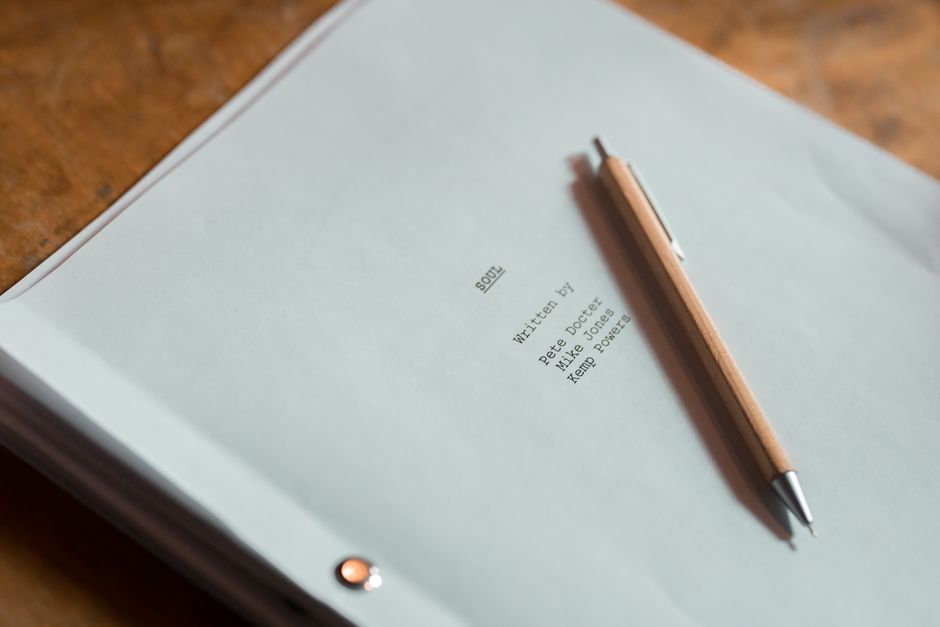
Photo by Neda Kekil on Pexels
Polish Your Script to a Professional Standard
This is where most student scripts fail. The concept might be brilliant, the premise might be high-concept and marketable, but the execution — the actual line-by-line craft — gives away the writer's inexperience. Producers read thousands of scripts a year. They make decisions in the first ten pages. If your dialogue is expository, your action lines are bloated, or your structure sags in the second act, the script goes in the pass pile regardless of your log line.
Invest seriously in the craft of writing better dialogue. It's the single fastest way to elevate a script from amateur to professional. Read produced scripts — not just classics, but recent indie acquisitions. Study how writers like Kelly Reichardt, Chloe Zhao, and Barry Jenkins construct scenes that reveal character through subtext rather than exposition. Use tools like Highland 2 or the industry-standard Final Draft 13 to format correctly. Use a logline generator and coverage service — services like The Black List, WeScreenplay, or Industrial Scripts will give you professional-level notes for a fraction of what a development executive costs.
Get coverage on your script before you send it anywhere. Black List professional evaluations, for around $100, can give you a score that becomes a calling card. A Black List score of 8 or above gets you noticed. A 9 or 10 can go viral in the industry. Several Black List scripts have been sold or optioned directly through the platform, and the site has become a legitimate discovery engine for unrepresented writers since its launch.
The Submission Strategy That Actually Works
Once your script is genuinely ready — not 'pretty good for a student,' but actually ready — you need a submission strategy. Querying blindly is a low-percentage game. Here's how to approach it with intention.
Start with screenplay competitions. The Nicholl Fellowship, Austin Film Festival Screenplay Competition, and Final Draft Big Break are the three most respected in the industry. Placing as a quarterfinalist or higher in any of these immediately signals to managers and producers that your work has passed through a credible filter. In 2026, several competition winners have used those placements to secure management within weeks of the announcement.
Next, target literary managers rather than agents first. Managers work with emerging writers more actively than agents, who typically require existing credits. Research managers who represent writers working in your genre. Manuscript Wishlist and QueryTracker are useful databases. Personalize every query — reference specific clients they represent and articulate why your script fits their roster. A query letter is a cover letter. It needs to be sharp, specific, and professional.
Don't overlook producer query lists. Many independent producers — particularly those working in genre film — accept unsolicited queries via email if you follow their submission guidelines. Sites like IMDbPro let you identify producers whose recent films match the tone and budget level of your script. Research is free. Sloppy targeting is expensive in terms of time and opportunity.
Finally, if your film school has any alumni working in the industry — and most do — use that connection honestly and directly. A brief email that says 'I'm a current student at [school], I have a contained thriller that just placed in the Nicholl quarterfinalists, and I'd love five minutes of your time' is not an imposition. It's how the industry works. Alumni generally want to help students who demonstrate they've done the work.
Protect Your Work and Understand Your Rights
Register your screenplay with the Writers Guild of America (WGA) script registry before you send it to anyone. At $25 for non-members, it's the cheapest protection you can buy. Also register with the U.S. Copyright Office for full legal protection. These aren't bureaucratic formalities — they're basic professional practice that signals you take your work seriously.
When a producer does come to the table with an option offer, do not sign anything without at least consulting with an entertainment attorney. Many entertainment lawyers offer free or discounted initial consultations. The WGA has minimum basic agreement standards for option and purchase prices — know those numbers before you negotiate. Your script is intellectual property with real value. Protect it accordingly.
Selling a screenplay while you're still in film school is not a matter of luck. It's a matter of craft, strategy, and relentless professional behavior in an industry that rewards preparation. The students who break through early are not necessarily the most talented — they're the ones who treat their writing like a business from day one. Start today. Your graduation ceremony can be a celebration of what you've already built, not a starting line.