ENG vs IND: What the England vs India Cricket Rivalry Can Teach Every Independent Filmmaker

When the first T20 between England and India at Chester-le-Street was abandoned due to rain in 2026, it struck me the same way a shoot day collapse does — all that preparation, all that anticipation, and then the sky simply decides otherwise. I've been on location shoots where a perfectly scouted exterior set got swallowed by an unexpected storm front, and you just stand there, script pages flapping in the wind, wondering what the weather gods have against your production schedule. The ENG vs IND rivalry, renewed again this summer across English grounds from Chester-le-Street to Old Trafford, is more than sport. For those of us who live inside the architecture of storytelling, it is a masterclass in tension, pacing, character, and the business of performance under pressure.
The Comeback Arc: Jofra Archer and the Filmmaker Who Keeps Returning
Jofra Archer is back in England's XI. If you follow cricket even casually, you know what that sentence carries with it — years of injury, absence, false starts, and the kind of patient, grinding rehabilitation that demands a nearly spiritual commitment to a craft most people assumed he'd walked away from permanently. The announcement ahead of the Old Trafford T20 felt like one of those third-act returns that screenwriters are warned not to make too convenient, and yet here it was, completely earned by the reality of lived experience.
I think about Archer every time I sit across from a filmmaker who shelved their first feature after a brutal festival rejection cycle. The instinct is to quit. The smarter instinct — the one Archer embodies — is to diagnose, rebuild, and return with sharper tools. That's not a metaphor I'm stretching. It's the literal creative process. In independent filmmaking, your first serious project is almost always your injury period. You overextend, you mismanage resources, you discover the gap between your ambition and your current skill set. The question is whether you treat that as an ending or as developmental data.
If you're in that rebuilding phase right now, the first thing I'd recommend is going back to fundamentals. Revisit your screenwriting tips library, not because your writing is necessarily the problem, but because structure is the skeleton everything else hangs on. When Archer came back, he didn't reinvent his action — he refined it. That's the move.
Mark Wood's Debut Energy vs. The First-Time Director
Mark Tongue is set to debut for England in this T20 series, and watching the conversation around that debut reminded me viscerally of every first-time director I've interviewed or worked alongside. There is a specific cocktail of terror and hunger that a debut carries — the knowledge that you are being watched, that every decision is being catalogued, and that the margin for error feels impossibly thin even when the veterans around you insist it isn't.
What I've observed across dozens of first features and short film productions is that debut filmmakers tend to make one of two critical mistakes. Either they over-prepare to the point of rigidity — unable to adapt when a location falls through or an actor goes off-script in an interesting direction — or they under-prepare and rely on instinct alone, which burns goodwill with crew fast. The England selectors are betting on Tongue because they've seen enough in domestic cricket to believe his instincts are sound and his preparation is serious. That's the exact profile you want when you're casting a first-time director with real budget behind them.
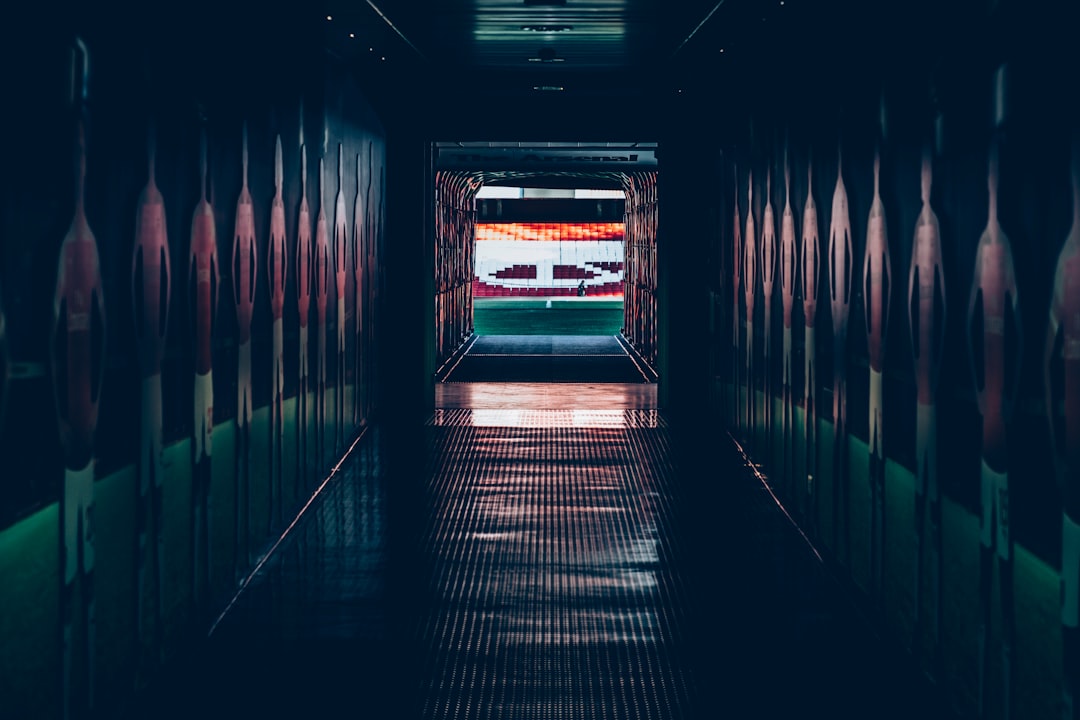
Photo by Nelson Ndongala on Unsplash
For debut filmmakers reading this: your job before day one on set is to have prepared so thoroughly that you can afford to be spontaneous. Understand your film production guide cold, know your shot list deeply enough to abandon it intelligently, and build relationships with your department heads that allow honest real-time communication. Tongue walking out for his first T20 cap has done the nets work. Have you done yours?
Shreyas Iyer, Captaincy, and the Indie Producer Mindset
On the Indian side of this rivalry, Shreyas Iyer is stepping into the T20 captaincy with something to prove — specifically, a first win in the role. The pressure of leadership in a high-stakes, short-format game like T20 cricket is structurally identical to producing an independent film on a compressed timeline. You are accountable for every moving part, you must make fast decisions with incomplete information, and the room will look to you to project confidence even when the internal reality is far more complicated.
I've produced projects where everything that could go wrong did — camera packages arriving incomplete, key cast stuck in travel delays, weather turning a golden-hour exterior into a grey soup. In those moments, the crew doesn't need a captain who has all the answers. They need one who can hold the shape of the plan while adapting its content. That's what good T20 captaincy looks like, and it's what good indie producing looks like.
Reading the Conditions: Old Trafford and Your Shooting Environment
Old Trafford in Manchester is one of cricket's most temperamentally unpredictable venues — overcast skies that can soften afternoon light beautifully but also roll in hard and fast, turning a tactical chase into a weather event. For a cinematographer, this should sound immediately familiar. Reading your environment — not just scouting it statically but understanding how it will behave across a full shooting day — is one of the most underrated production skills in independent film.
India's batting lineup will be eyeing runs at Old Trafford knowing they must account for seam movement in those cloud conditions. Your camera department needs to approach every exterior location with exactly the same intelligence. What does this space look like at 7am, at noon, at 3pm? Where does the light fall hard and where does it go soft? These aren't abstract aesthetic questions — they are logistical ones that affect your schedule, your exposure settings, and ultimately your story. If you need a practical foundation for this kind of thinking, the cinematography basics resource we've built here at FilmFuse is a strong starting point before you go deeper into location-specific work.
Vaibhav Suryavanshi and the Question of Young Talent in Production
The question swirling around this T20 series — will teenage sensation Vaibhav Suryavanshi debut? — maps onto a conversation I find myself having constantly in independent film circles in 2026: when do you give genuine, exceptional young talent the platform they're ready for, even if conventional wisdom says it's too soon?
The answer, in cricket and in film, is that readiness is not strictly age-dependent. It is preparation-dependent, temperament-dependent, and context-dependent. Some of the most technically mature cinematographers I've worked with came out of film school programs with less than three years of formal training but with an almost intuitive grasp of light and composition that took others a decade to develop. Suryavanshi's reported power-hitting metrics in domestic cricket tell a story that statistics alone can't capture — there is something in his intent that reads as ready. That same quality is what I look for in young crew members being considered for positions above their ostensible experience level.
The Business of Rivalry: What England vs India Means for the Film Industry
Let's talk business, because the ENG vs IND T20 series in 2026 is not just a sporting event — it is a media rights juggernaut, a content ecosystem, and a global audience activation machine. The series will generate documentary content, short-form social media production, broadcast packages, and behind-the-scenes access programming that employs hundreds of crew across both nations. For independent filmmakers paying attention, this is a template worth studying seriously.
The way cricket boards have learned to monetize peripheral content around marquee match events is directly applicable to how indie filmmakers should be thinking about their own projects. Your feature is not just a feature — it is a content universe if you build it right. Behind-the-scenes footage, director commentary, production vlog content, interview packages with cast and crew — all of this has genuine market value in 2026's fragmented streaming landscape. The ENG vs IND series generates as much revenue from adjacent content as it does from the match broadcast itself. That model is available to you, scaled appropriately.
The abandoned Chester-le-Street T20 stung because the setup was perfect — the conditions, the crowd, the narrative momentum of two powerhouse teams meeting on English soil. But the series continued. Old Trafford still happened. Archer still bowled. Iyer still led. The story didn't stop because one chapter got rained out. Your film doesn't stop because one shoot day collapses, one investor pulls back, one festival pass arrives instead of a laurel. The ENG vs IND rivalry, across every format, every generation, every weather event, keeps returning to the field. So should you.