
How Cinematographer Derek Mindler Uses a Sim Rig—and Hard-Won Experience—to Film IndyCar's Docuseries
There is a particular kind of preparation that separates a seasoned cinematographer from someone who simply shows up with a great camera. Derek Mindler, the director of photography behind IndyCar's behind-the-scenes docuseries, embodies that distinction completely. When faced with the challenge of capturing one of the fastest, most technically demanding sports in the world, Mindler did not just study race footage and call it research. He climbed into a racing simulator rig, learned how drivers actually experience speed and spatial awareness at 230 mph, and used those embodied insights to redesign his entire visual approach. It is the kind of creative problem-solving that every independent filmmaker can and should be studying right now.
Understanding the Assignment: Docuseries in a 230-MPH World
Motorsport documentary has always been a cinematographer's nightmare dressed up as a dream job. The access is extraordinary—pit lanes, garages, driver briefings, the raw emotion of a race-day morning—but the actual on-track footage presents logistical and optical challenges that most narrative film shoots simply never encounter. Cars moving at speeds that outpace most long lenses' ability to track cleanly. Environments soaked in engine noise, tire smoke, and constant motion. A story that has to unfold in real time with zero second takes.
Mindler's approach, as he has described it in conversations with industry press, starts with a foundational question that every documentary cinematographer needs to ask before a single frame is shot: What does this world actually feel like from the inside? That question drove him to spend meaningful time in a high-fidelity racing simulator before the production ever rolled. A sim rig in this context is not a gaming toy. Professional-grade setups used by drivers and now by Mindler's team feature force-feedback steering wheels, motion platforms, and visual systems calibrated to replicate the g-force onset and peripheral blur that a driver experiences in a real open-wheel car. By sitting in that rig, Mindler was not just getting a feel for the sport—he was conducting active pre-visualization for every camera position he would eventually choose.
This is the kind of preparation that independent documentary filmmakers rarely budget time or money for, but Mindler's example makes a compelling argument that immersive research pays exponential dividends in production efficiency. If you know what a space feels like from the inside, you know instinctively where the camera has to be to make an audience feel it too.
The Sim Rig as Pre-Visualization Tool
Let me be direct about why this matters beyond IndyCar and beyond motorsport. The sim rig is a metaphor for a broader principle: the best cinematographers find ways to physically inhabit the world they are about to shoot before they ever set up a tripod. On narrative sets, this might look like directing actors on a low budget through extensive rehearsal in the actual location so that camera choreography evolves organically from human behavior rather than being imposed on top of it. In documentary, it means getting so close to your subject's lived experience that your instincts during the shoot become reliable guides even when the shot list goes out the window—and in documentary, it always goes out the window.
Mindler has reportedly used the simulator specifically to map out where a camera mounted to a car would plausibly capture meaningful visual information versus where it would just produce motion blur and confusion. This is a technical question that most cinematographers would try to answer by reviewing archival broadcast footage. Mindler answered it by driving—or at least simulating driving—and paying attention to where his eyes actually went during the experience. That is proprioceptive cinematography, and it is as sophisticated a pre-production methodology as anything happening in big-budget narrative filmmaking today.
From a gear perspective, the docuseries appears to rely heavily on a combination of cinema-grade cameras capable of high frame rates for slow-motion capture and compact, ruggedized body options that can be rigged to the cars themselves. While specific camera bodies have not been officially confirmed for the full production package, the industry standard for this type of work in 2026 has gravitated toward systems like the Sony VENICE 2, the ARRI ALEXA 35 for primary documentary coverage, and smaller body options like the Sony FX3 or Canon EOS C70 for embedded car rigs—cameras that regularly appear on our roundups of the best cameras under $2,000 in modified or entry-level configurations that indie filmmakers can actually access.
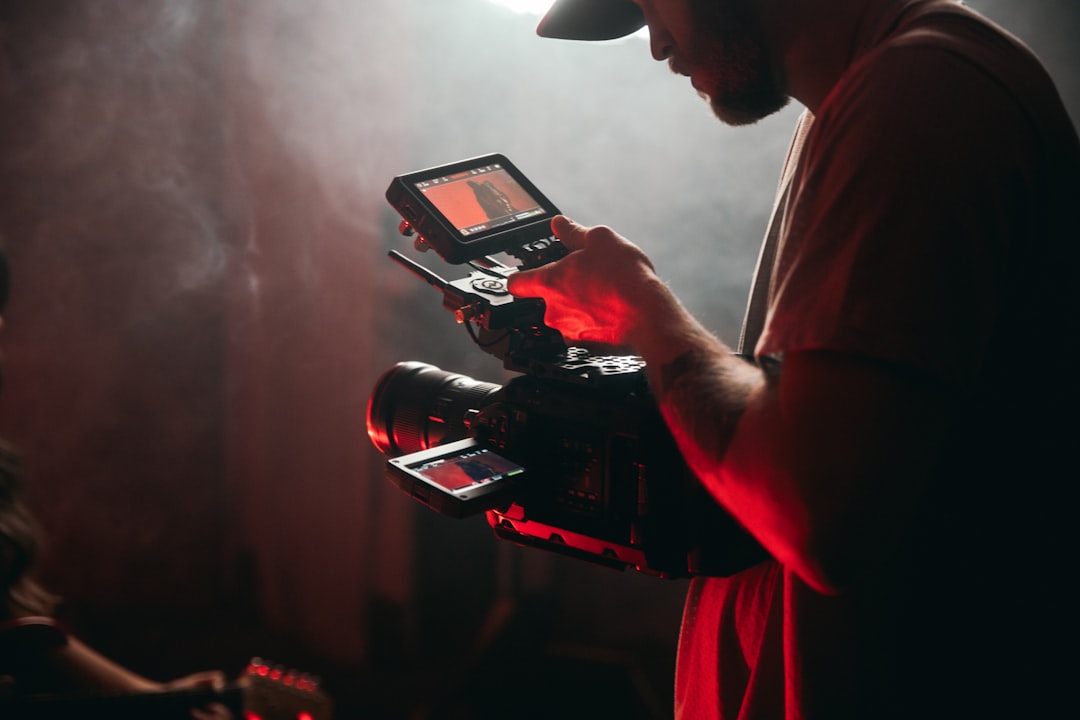
Photo by Kyle Loftus on Unsplash
Experience as Infrastructure: What Two Decades Buys You on a Shoot Like This
Derek Mindler is not a young DP finding his footing. His career spans commercial work, documentary production, and sports content at the highest levels, and that accumulated experience functions as invisible infrastructure on a production as logistically complex as an IndyCar docuseries. When you have shot in hostile environments—extreme heat, deafening noise, chaotic schedules dictated by weather and race officials rather than your call sheet—you develop what I can only describe as a problem-solving reflex. You stop catastrophizing when the plan falls apart and start immediately reconfiguring.
This is something that formal film education rarely teaches and that you genuinely cannot accelerate through willpower alone. Mindler's ability to operate effectively in the IndyCar paddock is built on hundreds of days of professional shooting experience where something went wrong and he had to fix it fast without anyone in the audience ever knowing. Independent filmmakers building their careers should take note: every difficult, underpaid, chaotic production job you say yes to in your early years is depositing experience into an account you will draw on for the rest of your career. The sim rig is the innovation layer. Experience is the foundation it rests on.
Crew Dynamics in High-Pressure Sports Documentary
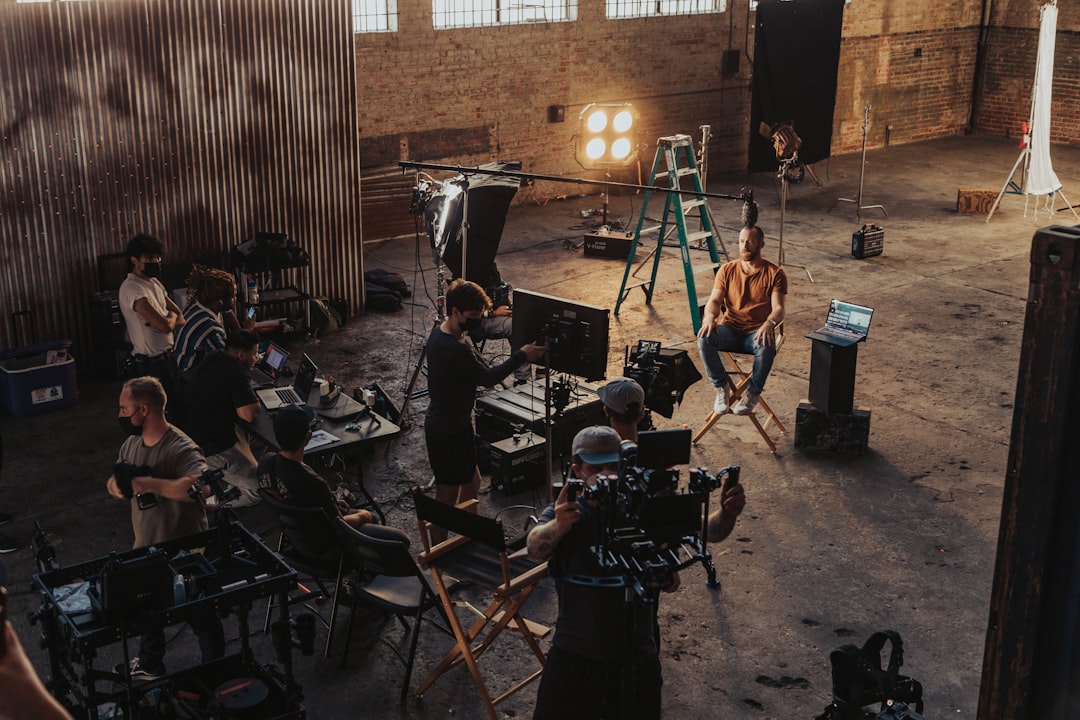
One dimension of Mindler's work that deserves more attention is how he structures his crew for maximum adaptability. Sports documentary at this level does not permit the kind of large, departmentalized crews that narrative features rely on. You need operators who can shift roles fluidly, camera assistants who can pull focus during unpredictable action, and sound recordists who can capture clean dialogue two feet from a running engine. The DP's job in this environment is as much about crew leadership and communication as it is about optical decisions. Mindler has spoken about the importance of pre-communicating visual intentions to his team so that when the moment arrives and there is no time to talk, everyone is already moving in the right direction.
Managing the Edit in Your Head While You Shoot
Another hallmark of Mindler's approach—and of experienced documentary cinematographers generally—is the ability to edit mentally while shooting. In a race environment, you cannot cover every angle. You have to make real-time decisions about which moments are structurally essential to the story and which are atmospheric B-roll. That requires understanding not just cinematography but narrative construction. It is the reason why studying screenwriting and story structure makes you a better cinematographer, not just a better director. The shot you choose to hold on is an editorial decision made in the field, and getting it right consistently is a function of story literacy as much as visual instinct.
What Independent Filmmakers Can Apply Right Now
The lessons from Derek Mindler's IndyCar work translate directly to independent documentary and narrative production, even at a fraction of the budget. The sim rig principle—find a way to physically inhabit your subject's world before you shoot—can be executed on almost any budget. Shooting a film about rock climbers? Climb. Doing a documentary about restaurant kitchen culture? Stage in a kitchen. Making a narrative film about a musician? Spend a week attending rehearsals and performances before you storyboard a single shot.
The experience principle is equally transferable. Build your shot list and your visual strategy around what you know will happen, but trust your accumulated instincts to handle what you cannot predict. And invest in crew relationships before the shoot, not during it, so that your team is already calibrated to your communication style when the pressure is on.
Understanding how these projects eventually find audiences is also critical. Whether you are making a sports docuseries for a streaming platform or an independent documentary destined for the festival circuit, learning how film distribution works in the current landscape will shape every creative decision you make, from acquisition format to delivery specifications to the story angles most likely to resonate with platform acquisitions teams.
Derek Mindler's work on the IndyCar docuseries is a case study in what happens when technical mastery, creative curiosity, and deep preparation converge. The sim rig is the headline, but the real story is the professional philosophy behind it: that the cinematographer's job begins long before the camera rolls, and the best visual storytellers never stop finding new ways to close the distance between themselves and the world they are trying to capture.