
Canon EOS C70 Cinema Camera Is Now $1,300 Off at B&H — Here's Why Indie Filmmakers Should Pay Attention
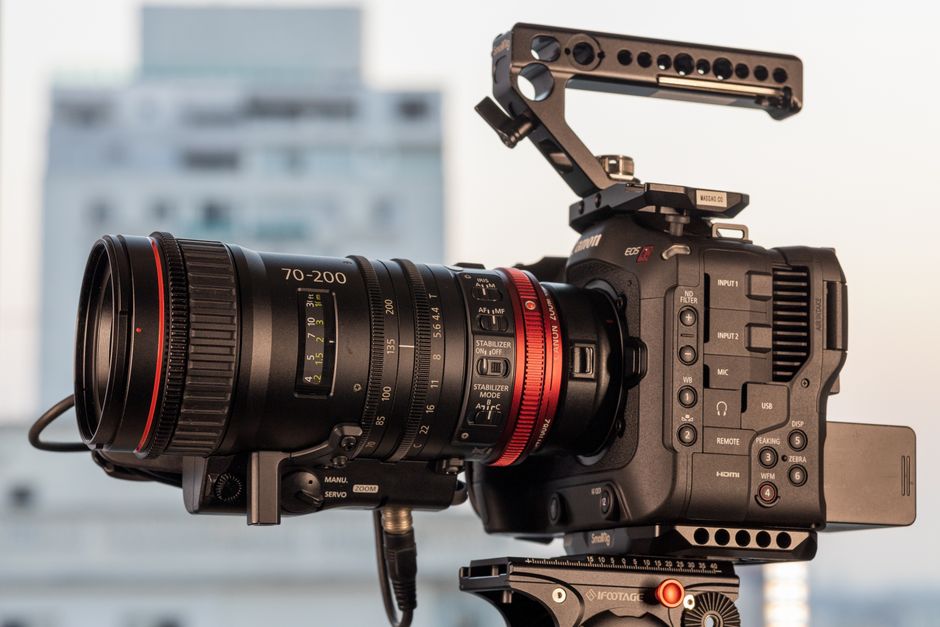
Price drops on professional cinema cameras don't happen often, and when they do, the best ones disappear fast. B&H Photo has just slashed $1,300 off the Canon EOS C70 Cinema Camera — one of the most capable, compact, and genuinely filmmaker-friendly cinema cameras on the market today. Whether you're a solo documentary shooter, a narrative indie director working with a skeleton crew, or a cinematographer looking to own your primary camera package rather than rent forever, this deal deserves your full attention right now in 2026.
What Is the Canon EOS C70 and Why Does It Matter?
The Canon EOS C70 launched as Canon's entry into the compact cinema camera space, bridging the gap between the mirrorless hybrid world of the EOS R system and the professional Cinema EOS lineup that includes workhorses like the C300 Mark III and the C500 Mark II. What Canon pulled off with the C70 is genuinely impressive: they packed a Super 35mm Dual Gain Output (DGO) sensor into a body that's barely larger than a prosumer mirrorless camera, then bolted on the RF mount — Canon's newer, wider-throat lens system — and gave it Cinema EOS color science.
The sensor is the real headline here. The DGO sensor architecture reads each pixel at two different ISO settings simultaneously and combines them, which is why the C70 can achieve up to 16 stops of dynamic range in Cinema RAW Light. For indie filmmakers who are often shooting without the luxury of a full lighting package, that kind of latitude in the shadows and highlights is not a marketing number — it's the difference between a shot that breathes and one that clips. I've personally seen footage from the C70 pulled back from situations that would have destroyed lesser sensors, and the results are consistently clean.
At its original retail price, the C70 sat in a competitive but uncomfortable middle zone — more than a Sony FX6 after accessories, and enough to make budget-conscious productions hesitate. At $1,300 off, that conversation changes entirely. This puts the C70 in reach of a dramatically wider pool of independent filmmakers, many of whom have been renting cinema cameras per-project and watching those costs eat into their post-production budgets year after year.
The RF Mount Advantage — and the Ecosystem Question
Every professional cinema camera purchase is also a lens ecosystem commitment, and the Canon EOS C70's RF mount deserves a serious, honest conversation. The RF mount is Canon's modern mirrorless system, featuring a wider 54mm throat diameter and a 20mm flange distance that allows for optical designs that simply weren't possible with the older EF mount. In practical terms, this means Canon's RF lenses can be faster, sharper, and more compact than their EF predecessors.
But here's the reality check that any experienced cinematographer will give you: the RF lens lineup, while growing rapidly, is still younger than the EF ecosystem that accumulated decades of glass. The good news is that Canon's EF-EOS R adapter works flawlessly with the C70, meaning your existing EF primes — Sigma Art series, Canon L glass, vintage Zeiss CP.2s — can all mount up without issue. Many working DPs I've spoken with are running a hybrid kit: a set of Canon RF Cinema Prime Lenses for their hero shots and critical close-ups, and adapted vintage or EF glass for wider establishing work where character and texture matter more than clinical sharpness.
If you're building a kit from scratch in 2026, the RF ecosystem is genuinely compelling. The Canon RF 35mm f/1.8 Macro IS STM, the RF 50mm f/1.2L USM, and the RF 85mm f/1.2L DS (with its defocus smoothing coating for that painterly bokeh) are all exceptional cinematic lenses. And for those shooting documentary or run-and-gun content, the RF 24-105mm f/4L IS USM is one of the most practical cinema zooms available at this price tier. Good cinematography tips for indie filmmakers always start with understanding your lens choices as storytelling decisions, not just optical ones.
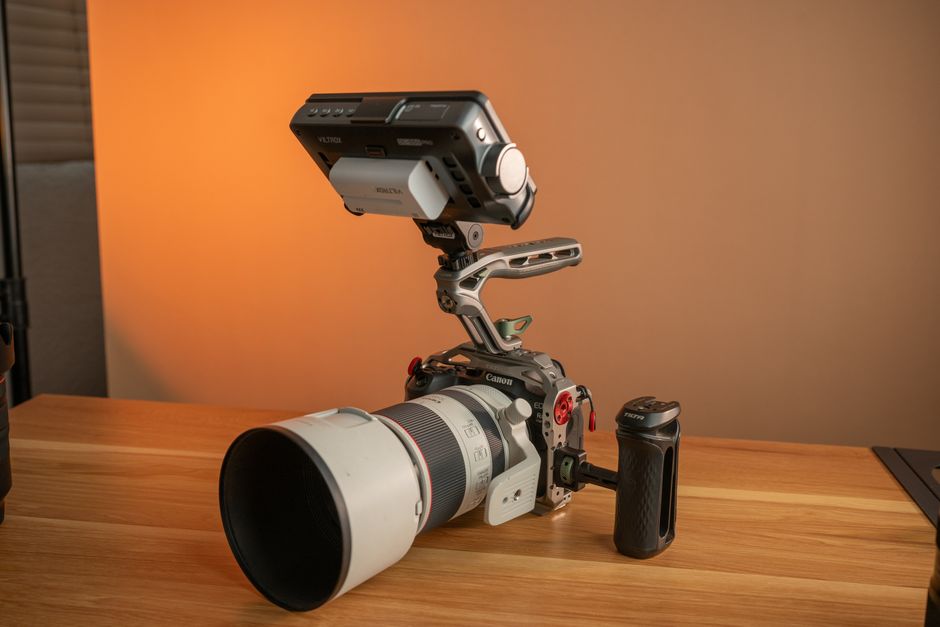
Photo by Amar Preciado on Pexels
Real-World Performance: What the C70 Actually Delivers on Set
Image Quality and Codec Flexibility
The Canon EOS C70 records in Cinema RAW Light, XF-AVC (H.265 and H.264), and 4K up to 120fps in certain modes. Cinema RAW Light is Canon's compressed raw format, and it's well-suited to indie production workflows — the files are manageable in size compared to uncompressed RAW, but they retain enormous latitude for color grading in DaVinci Resolve, which is where most independent post-production happens today. Canon Log 2 is the flavor of choice for maximum dynamic range capture, and it grades beautifully with Canon's LUTs as a starting point before you push into your own color language.
The internal ND filter system — covering 2, 4, and 6 stops of ND — is something that gets undervalued in spec sheets but is transformative on actual shoots. Running an ND wheel without needing to screw on physical filters means you can respond to changing light conditions in seconds. For documentary shooters and narrative directors working in practical locations, this is one of those features you don't fully appreciate until you've shot without it and lost a take to a blowing cloud cover change.
Autofocus is Dual Pixel CMOS AF — Canon's system that has earned a genuine reputation as the best in the cinema camera space. For directing actors on a low budget, reliable autofocus means you can focus on performance and chemistry rather than pulling focus manually with a one-person crew. Eye-detection tracking on the C70 is accurate and confidence-inspiring in a way that competing systems from Sony and Panasonic still don't quite match in cinema-body form factors.
Ergonomics and Run-and-Gun Reality
The C70's form factor is genuinely polarizing among cinema camera users, and it's worth being direct about it. The camera is small — significantly smaller than a C300 Mark III — which is a feature for some and a limitation for others. Without a cage and top handle, it handles more like an advanced mirrorless camera than a traditional cinema rig. With a SmallRig or Tilta cage, a top handle, and a monitor like the Atomos Shogun or SmallHD Focus 7, it becomes an extremely capable and balanced documentary or narrative camera that a single operator can manage comfortably for extended periods.
Battery life runs on Canon BP-A30 or BP-A60 batteries. Buy the BP-A60s. Do not be tempted by the smaller batteries if you're shooting anything longer than short-form content. This is the kind of specific, hard-won knowledge that saves you a ruined shooting day.
Who Should Buy the Canon EOS C70 at This Price?
Let's be specific about who this deal serves best, because no camera is right for every filmmaker and honest gear journalism respects that.
This is an exceptional buy for the working indie director-DP who is currently renting a cinema camera package for $400 to $600 per shooting day. At $1,300 off, the break-even math on ownership versus rental improves dramatically. If you're shooting four to six projects a year and renting each time, you'll own this camera free-and-clear in savings within two production cycles. That's not a hypothetical — that's the actual business case, and understanding how film distribution works in 2026 means you also understand why owning your image pipeline matters when you're trying to retain deliverable rights and quality control through to the platform sale.
Documentary filmmakers will find the C70 a natural fit. The internal NDs, reliable autofocus, compact size, and exceptional low-light performance (native ISO 800 and 3200) make it one of the best documentary cinema cameras available at any price point in this class. For short-form narrative filmmakers working on festival projects, music videos, and branded content — the clients who are increasingly demanding a cinematic image quality above what mirrorless hybrids provide — the C70 delivers that quality at a price point that finally makes financial sense for independent ownership.
Who should probably pass? Filmmakers who are deeply invested in Sony's FX ecosystem and E-mount glass already have a strong alternative in the FX6, and switching mount systems has real costs. Shooters who need 6K or higher resolution for large-format theatrical work should look at the C300 Mark III or C70's larger siblings. And anyone who needs ProRes RAW recording should know that the C70 records Cinema RAW Light internally — ProRes RAW requires an Atomos external recorder, which adds cost and complexity to the rig.
But for the vast middle ground of independent filmmakers in 2026 — people making real work, telling real stories, building real careers — the Canon EOS C70 at $1,300 off its standard retail price at B&H is one of the most significant cinema camera purchasing opportunities this year. Deals like this don't linger. If this camera fits your workflow and your lens ecosystem, the time to act is now before B&H returns to full price or stock runs thin. This is the kind of gear inflection point that separates filmmakers who upgrade their image quality and the filmmakers who keep meaning to.