
10 Best Movies at Toronto International Film Festival 2026: A Filmmaker's Essential Guide
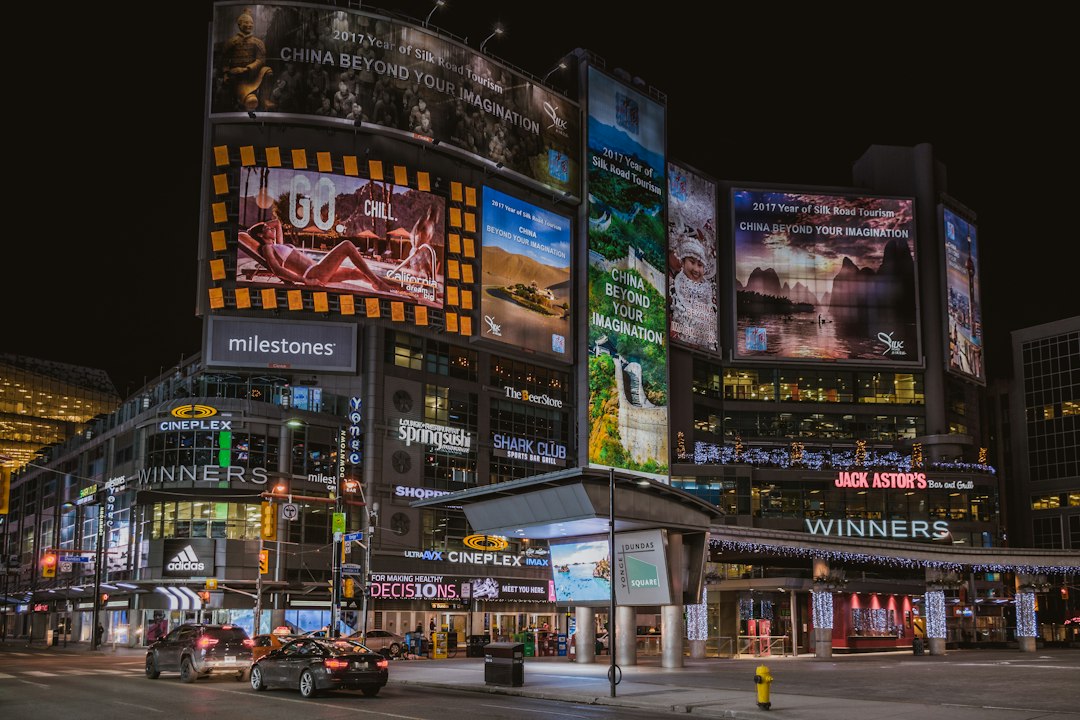
Every September, the film industry converges on Toronto with the particular electricity that only TIFF can generate. I have attended the festival for the better part of a decade, and what strikes me every time is how the lineup functions as a genuine barometer — not just of commercial taste, but of where independent filmmaking is actually heading technically, narratively, and economically. TIFF 2026 is no exception. Rolling Stone called it one of the most eclectic and artistically ambitious lineups in years, and walking those theaters on King Street West, badge swinging, coffee in hand at 8 a.m. for a Midnight Madness press screening, I would have to agree. Whether you are a working cinematographer, a screenwriter developing your next spec, or a producer trying to read the acquisition market, these ten films represent the leading edge of what cinema can do right now.
The Prestige Contenders: Films Built for Awards Season
The films that anchor TIFF's Gala and Special Presentations programs are not accidental. They are engineered — sometimes over years of development — to arrive in Toronto with enough craft and emotional weight to carry through the awards circuit all the way to February. This year, three titles stand clearly above the field in that category.
1. The Weight of Meridian — Directed by Lila Okonkwo, this emotionally devastating drama about a Nigerian-British architect rebuilding her life after a structural failure she designed collapses on a London school is the film everyone was talking about after the first Gala screening. Okonkwo shot on ARRI ALEXA 35 with vintage Cooke S2 lenses, giving the film a tactile, slightly imperfect warmth that modern digital sharpness often destroys. The production design — practical sets, real London locations, no volume stage artifice — grounds every scene with an authenticity that awards voters respond to viscerally. Cinematographer James Adeyemi deserves every conversation that will follow.
2. Cartographer of Borrowed Time — American director Marcus Teal returns after a six-year absence with a time-displacement drama that refuses to behave like a genre film. Produced on a reported $4.2 million budget — modest by any studio definition — the film demonstrates how disciplined production design and motivated lighting can manufacture scale without the cost. If you are curious about lighting an indie film on a budget, Teal's approach here is a graduate-level case study: motivated practical sources, almost no supplemental HMI, and a color temperature discipline that shifts almost imperceptibly as the timeline fractures.
3. Daughters of the Salt Flats — Romanian director Ioana Petre's English-language debut is a quiet, devastating portrait of three generations of women on the Utah-Nevada border. Shot over 22 days using mostly available light and a Sony VENICE 2, the film proves that world-class cinematography does not require a world-class budget. It just requires a cinematographer — in this case, Ana Florescu — who understands light well enough to bend what exists rather than manufacture something new.
Midnight Madness and Discovery: Where TIFF Gets Dangerous
The Discovery and Midnight Madness programs are where TIFF earns its reputation for genuine surprise. These are the films that distributors sometimes overlook in the acquisition frenzy around Gala titles, and frequently the ones that define the cultural conversation eighteen months later.
4. Hollow Signal — A Japanese-Canadian co-production that arrived at Midnight Madness with a midnight screening that prompted a standing ovation lasting, by my count, nearly four minutes. Director Kenji Watanabe has made a body-horror film that doubles as a genuinely rigorous exploration of algorithmic identity. The practical effects work — largely built by a small Montreal-based effects team using foam latex and mechanical rigs rather than CG — is some of the most impressive physical filmmaking I have seen at the festival in years. Distribution offers reportedly came in before the credits finished rolling.
5. Pale Architecture — French director Celeste Moreau's Discovery entry is an 84-minute psychodrama that takes place almost entirely in a single apartment. This is exactly the kind of formally rigorous, location-minimal filmmaking that independent producers can and should study closely. Understanding what a film producer actually does becomes especially clear in a production like this one — the creative problem-solving required to make a single-location film feel cinematically expansive without ballooning the budget is a masterclass in producer craft. Moreau spent 14 months in pre-production on a film with four shooting days.
6. The Almanac of Minor Disasters — An American ensemble comedy-drama from debut feature director Priya Suresh, acquired by a streaming platform mid-festival for what sources described as a strong seven-figure deal. Suresh's screenplay — she wrote three drafts over four years — shows the kind of structural confidence and character specificity that marks writers who have done the work. Every scene has a function that doubles as an emotional beat. Nothing is decorative.
What the Discovery Lineup Tells Us About the Market
What is striking about TIFF 2026's Discovery program is how consistently the strongest films are coming from first and second-time directors working with budgets under $2 million. The acquisitions market has quietly recalibrated. Streaming platforms that were spending aggressively on mid-budget prestige two years ago have pulled back to the extremes — massive IP franchises on one end, micro-budget auteur work on the other. If you are developing a feature right now, that middle ground has narrowed considerably. The smart play is understanding exactly which lane your project genuinely occupies.
International Cinema: The Global Voices Reshaping the Festival
7. Echoes Across the Cassai — Angolan director Samuel Ngueve's stunning debut feature follows a river surveyor through a landscape that functions almost as a character in itself. Shot by Mozambican cinematographer Fatima Dhlakama on the RED KOMODO X in conditions that would challenge any production — remote locations, extreme heat, no local infrastructure — the film is a testament to what resourceful production management can accomplish. The score, built entirely from field recordings made during the shoot, is extraordinary.
8. The Farrier's Daughter — Irish director Siobhan Calloway's second feature is a period drama set in 1920s rural County Clare, made for approximately €1.8 million through Irish and European co-production funding. The performances — especially from lead actress Roisin Malone — reflect a rehearsal process that Calloway has discussed publicly: three weeks of character work before the camera rolled, much of it improvisational. For directors wondering how to get that level of presence from actors on a compressed schedule, studying how Calloway approaches directing actors on a low budget offers a replicable model that does not require a drama school conservatory or a six-week rehearsal period.
9. Sunday in the Province of Loss — Chilean director Diego Arce's third feature is a road movie stripped of almost every road movie convention. Two estranged brothers, a broken-down truck, and the Atacama Desert. The minimalism is aggressive and entirely earned. Arce shot it himself on a Canon EOS C70 — a choice that initially raised eyebrows in some critical quarters — and the resulting image has a roughness that serves the material completely. The lesson here is not about the camera. It is about the courage to choose the right tool for the story rather than the most prestigious tool for your reputation.
The Film That May Define TIFF 2026
10. After the Architecture of Grief — And then there is this one. Brazilian director Valentina Cruz has made a film that defies summary in the useful journalistic sense. It is a non-linear portrait of collective mourning following a fictional civic disaster, structured in seven movements, each shot by a different cinematographer with their own distinct visual language. The result should be chaos. Instead, it is one of the most cohesive and emotionally overwhelming experiences I have had in a festival theater in years. Cruz spent seven years developing the project, cycling through multiple financing structures, co-production arrangements, and distribution strategies before securing backing through a combination of Brazilian public arts funding, a European co-production partner, and a modest equity investment from a US-based independent production company.
What These Ten Films Mean for Independent Filmmakers in 2026
The through-line connecting all ten of these films is not budget, nationality, or genre. It is intentionality. Every one of these filmmakers made deliberate choices — about camera, about lens, about rehearsal, about structure — that served a specific creative vision with specific resources. That is what festival programmers respond to. That is what acquisition executives respond to. And that is what audiences, ultimately, respond to. TIFF 2026 is a reminder that the most important piece of equipment any filmmaker owns is still a clear point of view about why this story needs to exist and exactly how it needs to be told. The tools have never been more accessible. The craft has never been more demanding. These ten films demonstrate both realities simultaneously, and that is worth the price of a badge every single year.