
Artificial intelligence is reshaping the creative landscape of cinema at an unprecedented pace. From scriptwriting and casting to editing and visual effects, AI in Film Production has become a transformative force that is redefining how movies are planned, created, and distributed. In 2026, filmmakers are no longer asking whether artificial intelligence should be used, but how it can be used responsibly and creatively to enhance storytelling while preserving artistic integrity.
This article explores the real-world use cases of AI in filmmaking, the most powerful tools shaping modern productions, and the ethical concerns that continue to spark debate across the industry. Whether you are an independent filmmaker, a studio professional, or a film enthusiast, understanding AI in Film Production is essential for navigating the future of cinema.
Understanding AI in Film Production
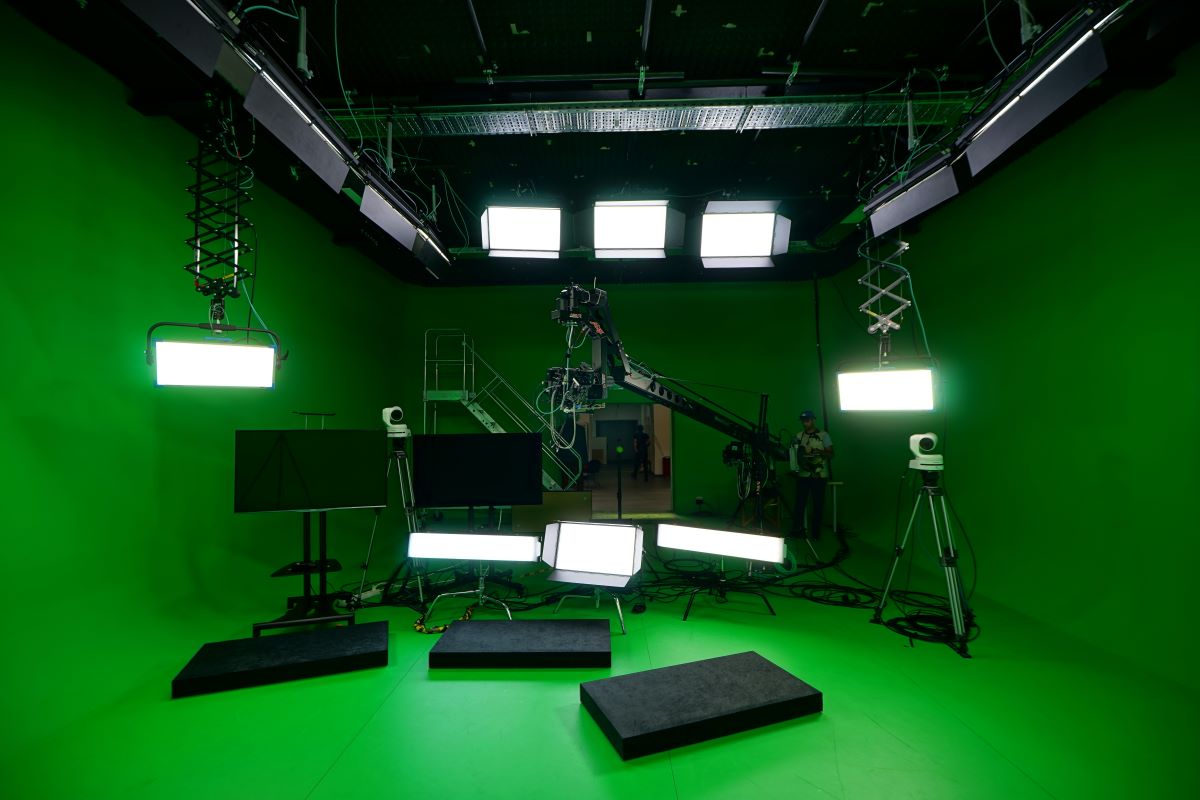
AI in Film Production refers to the application of artificial intelligence technologies throughout the filmmaking process. These systems rely on machine learning, computer vision, natural language processing, and predictive analytics to automate tasks, analyze creative data, and assist human decision-making.
Unlike traditional software, AI systems learn from data. They study scripts, footage, audience reactions, and historical trends to make intelligent suggestions. This capability allows filmmakers to work faster, reduce costs, and experiment creatively in ways that were previously impossible.
Why AI Matters in Modern Filmmaking
The increasing adoption of AI in Film Production is driven by several key factors:
-
Rising production costs and tighter schedules
-
Demand for high-quality content across multiple platforms
-
Growth of streaming services and global audiences
-
Advancements in AI accuracy and accessibility
-
Need for data-driven decision making
Key Stages Where AI Is Used in Film Production
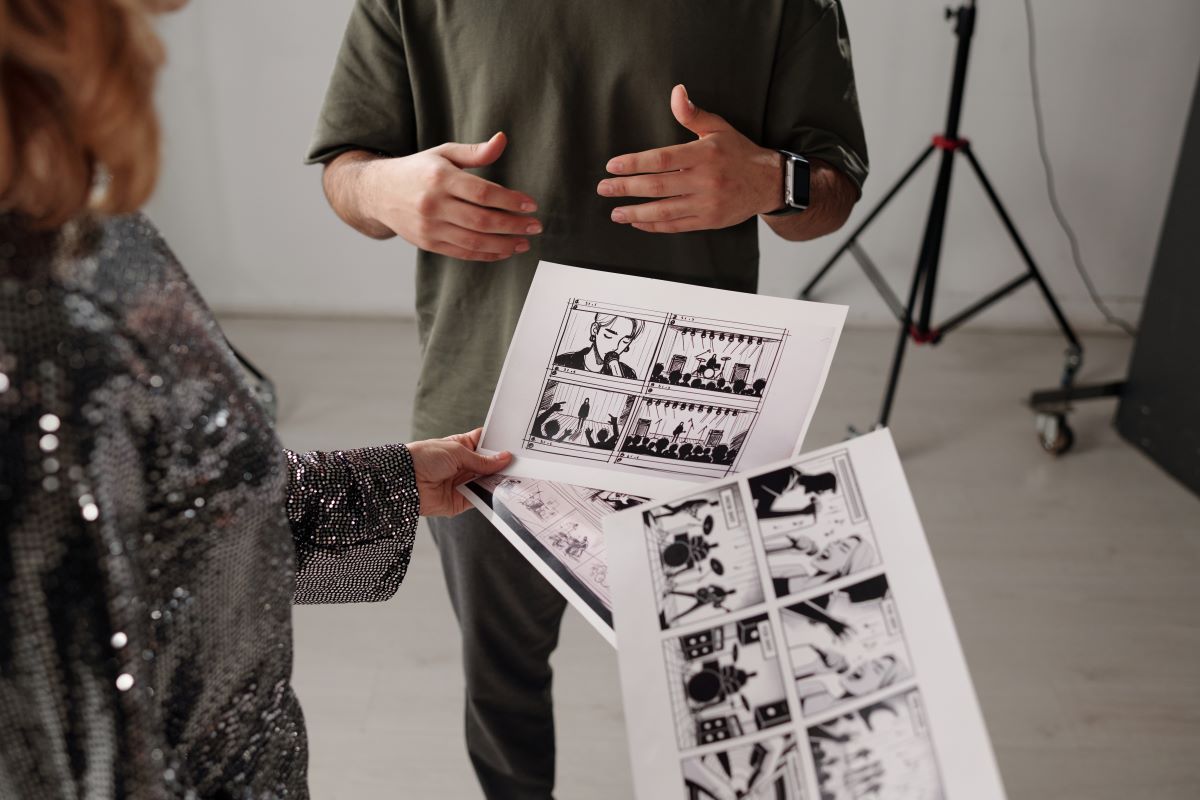
AI technologies are now embedded across nearly every stage of filmmaking. Below is an overview of how AI in Film Production is applied from concept to final release.
| Film Stage | AI Application | Impact |
|---|---|---|
| Development | Script analysis and story prediction | Faster greenlight decisions |
| Pre-production | Casting suggestions and scheduling | Reduced planning time |
| Production | Virtual sets and camera optimization | Cost-efficient shoots |
| Post-production | Editing and VFX automation | Faster turnaround |
| Distribution | Marketing analytics and trailer optimization | Higher audience engagement |
AI in Scriptwriting and Story Development
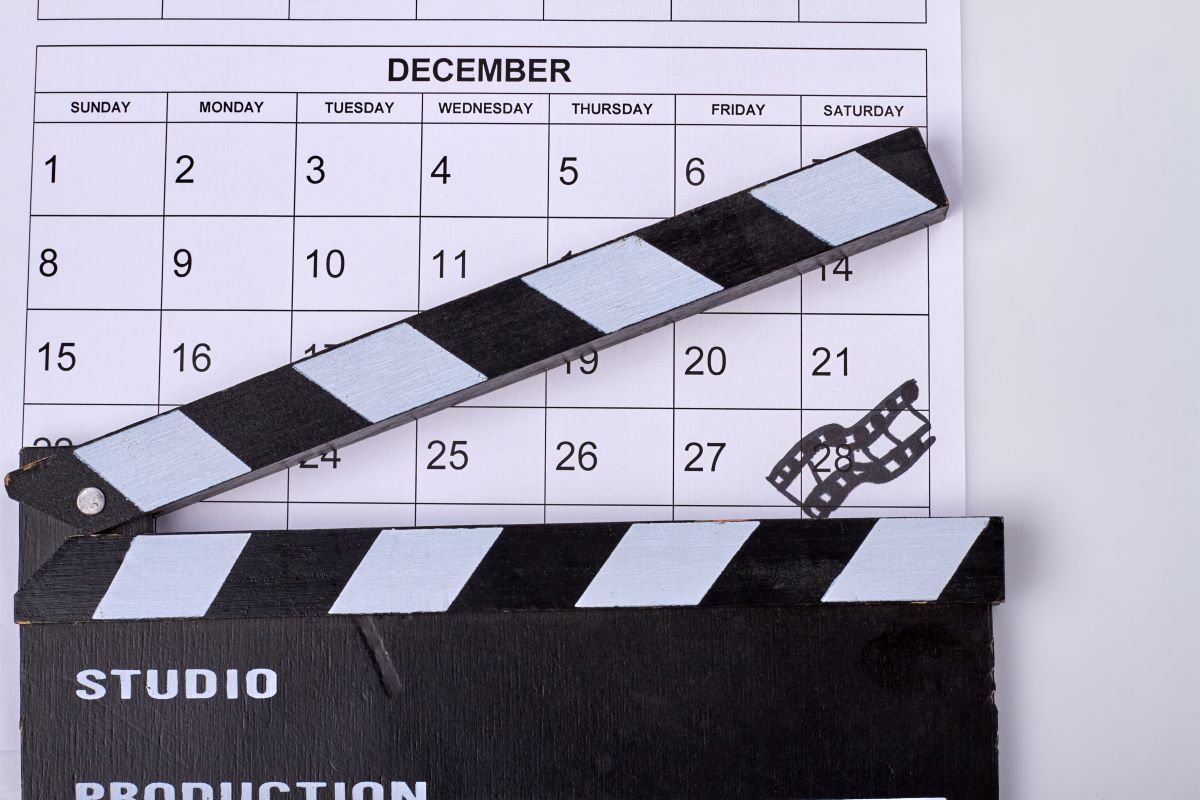
One of the earliest and most influential uses of AI in Film Production is in scriptwriting and story development. AI-powered tools can analyze thousands of screenplays to identify patterns related to genre, pacing, character arcs, and dialogue structure.
How AI Assists Scriptwriters
AI tools support writers without replacing creativity. They function as intelligent assistants that provide insights rather than finished scripts.
-
Analyzing story structure and pacing
-
Predicting audience engagement and emotional response
-
Suggesting plot improvements or alternative endings
-
Identifying weak dialogue or repetitive scenes
-
Comparing scripts to successful films in similar genres
Benefits for Studios and Writers
Studios use AI to assess the commercial potential of scripts before investing millions in production. Writers use AI feedback to refine narratives while maintaining creative control.

AI in Casting and Talent Selection
Casting is a critical decision that can define a film’s success. AI in Film Production is increasingly used to assist casting directors by analyzing performance data, audience sentiment, and historical box office results.
AI-Driven Casting Insights
AI systems can evaluate actors based on multiple criteria:
-
Past performance success
-
Audience appeal across demographics
-
Social media influence and reach
-
On-screen chemistry predictions
-
Budget compatibility
Casting Use Case Table
| Casting Factor | AI Contribution |
|---|---|
| Actor popularity | Predicts market appeal |
| Role suitability | Matches character traits |
| Budget planning | Optimizes casting costs |
| Global reach | Evaluates international appeal |
AI in Pre-Production Planning
Pre-production involves complex logistics, and AI in Film Production plays a vital role in streamlining this phase. AI tools can generate shooting schedules, optimize locations, and reduce planning errors.
AI-Powered Planning Capabilities
-
Automatic scheduling based on availability and weather
-
Budget forecasting and cost optimization
-
Location scouting using image recognition
-
Risk assessment for delays or overruns
-
Resource allocation optimization
These capabilities help productions stay on schedule and within budget while reducing human error.
AI in Cinematography and Virtual Production
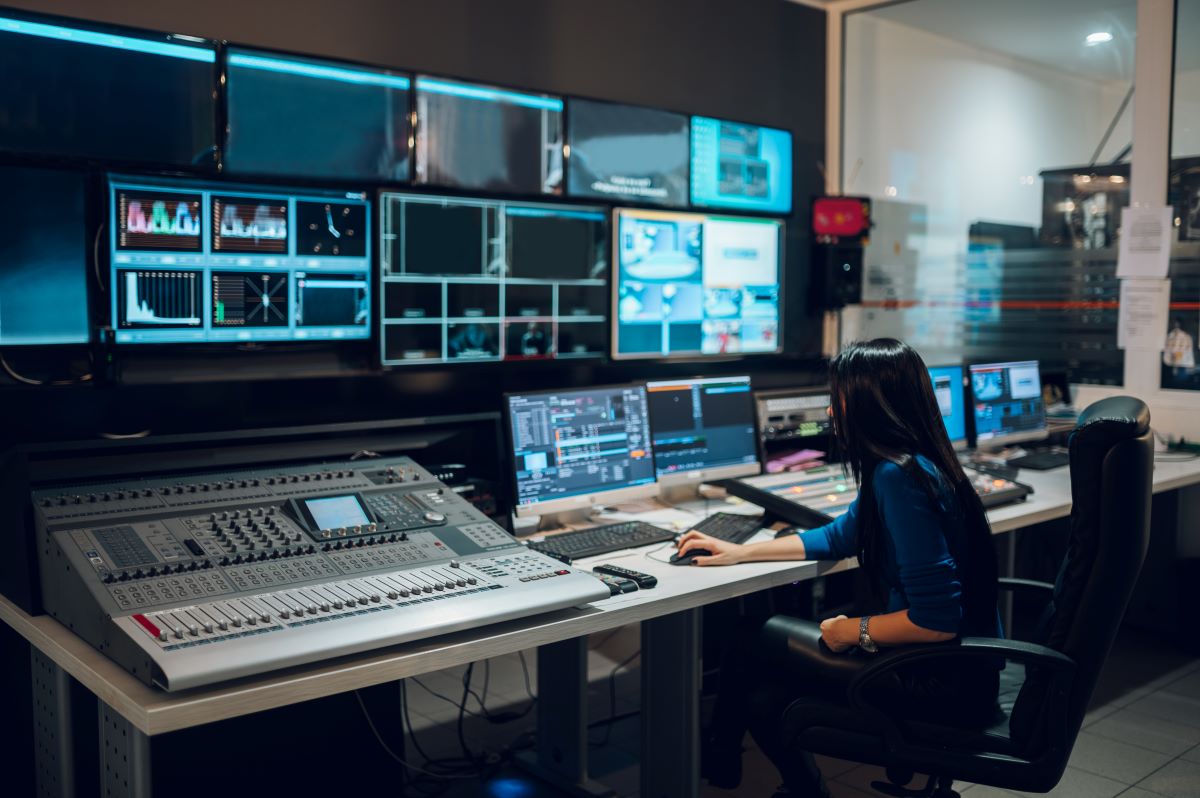
Modern filmmaking increasingly relies on virtual production environments, where AI plays a central role. AI in Film Production enables real-time scene visualization, camera simulation, and lighting optimization.
Virtual Sets and AI Cameras
AI-powered virtual sets allow filmmakers to preview scenes before filming. These tools can simulate lighting, depth, and camera movement in real time.
Benefits include:
-
Reduced need for physical sets
-
Fewer reshoots
-
Improved creative experimentation
-
Faster decision-making on set
AI in Film Production: Use Cases, Tools, and Ethical Concerns
As artificial intelligence continues to mature, its influence in cinema has expanded far beyond planning and visualization. Today, AI in Film Production is deeply embedded in post-production, marketing, and audience analysis, enabling filmmakers to deliver high-quality content faster and more efficiently than ever before.
AI in Film Editing and Post Production
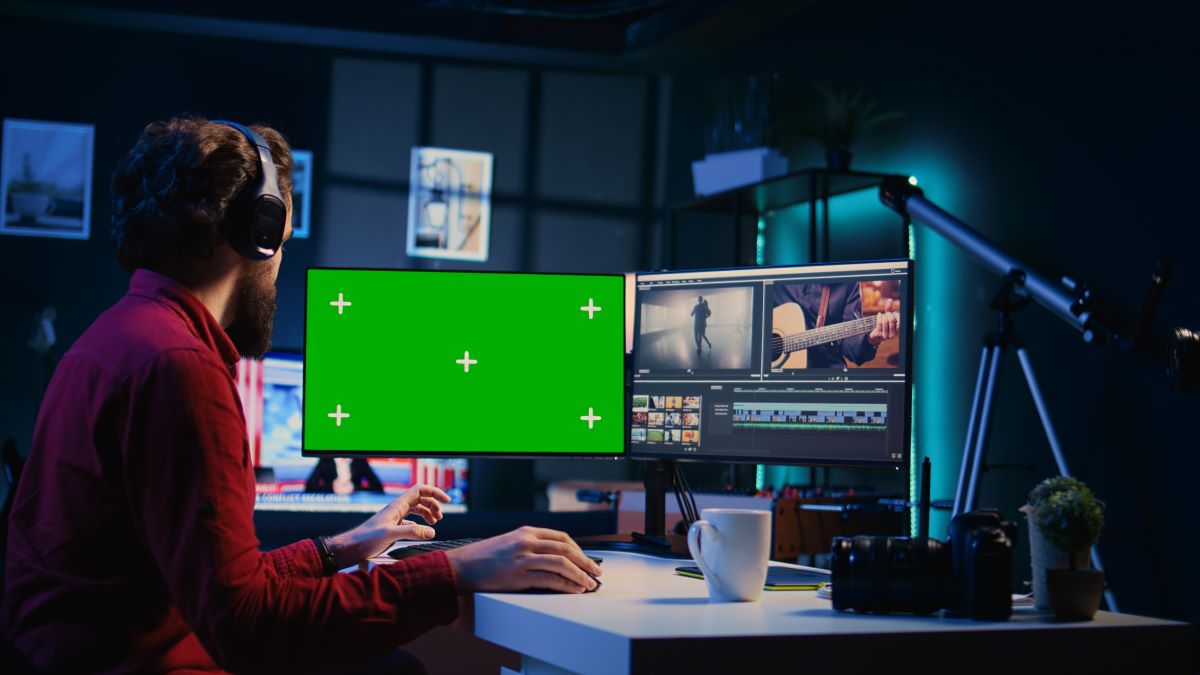
Post-production is one of the most time-consuming and expensive stages of filmmaking. AI in Film Production has dramatically reduced editing timelines while improving precision and creative flexibility.
How AI Transforms Film Editing
AI-powered editing tools analyze raw footage to identify usable takes, emotional highlights, and continuity errors. These systems assist editors rather than replacing them, allowing human creativity to guide the final narrative.
Key editing applications include:
-
Automatic scene detection and tagging
-
Smart cut suggestions based on pacing analysis
-
Dialogue cleanup and noise reduction
-
Color correction and grading assistance
-
Scene continuity and error detection
AI Editing Benefits
| Editing Task | Traditional Time | AI-Assisted Time |
|---|---|---|
| Footage sorting | Several days | A few hours |
| Rough cut assembly | Weeks | Days |
| Color grading | Manual adjustments | AI-assisted presets |
| Sound cleanup | Manual processing | Automated enhancement |
AI in Visual Effects and CGI
Visual effects are among the most resource-intensive aspects of filmmaking. AI in Film Production has revolutionized CGI creation by automating complex processes that once required large teams.
AI Capabilities in VFX
-
Background replacement and environment generation
-
Facial animation and digital doubles
-
Motion tracking and object removal
-
Physics simulation optimization
-
Realistic lighting and texture generation
AI allows VFX artists to focus on creative refinement rather than technical repetition.
VFX Efficiency Table
| VFX Area | AI Impact |
|---|---|
| Green screen removal | Faster and cleaner |
| Crowd simulation | Automated population |
| De-aging effects | Real-time processing |
| CGI realism | Improved lighting accuracy |
AI in Sound Design and Music Composition
Sound design is essential for emotional storytelling. AI in Film Production now supports composers and sound designers by generating adaptive soundscapes and enhancing audio quality.
AI Sound Applications
-
Automated background score generation
-
Dialogue enhancement and lip-sync correction
-
Sound effect placement optimization
-
Audio mixing and mastering assistance
-
Music mood adaptation for scenes
AI does not replace composers but provides a foundation that accelerates creative workflows.
AI in Film Marketing and Distribution
The success of a film depends heavily on its marketing strategy. AI in Film Production extends into distribution by helping studios understand audiences and optimize promotional content.
AI Marketing Use Cases
-
Trailer editing and A B testing
-
Poster and thumbnail optimization
-
Audience segmentation and targeting
-
Release timing predictions
-
Box office performance forecasting
Marketing Intelligence Table
| Marketing Element | AI Advantage |
|---|---|
| Trailers | Higher engagement rates |
| Social media ads | Personalized targeting |
| Release dates | Optimized scheduling |
| Audience reach | Improved global visibility |
Popular AI Tools Used in Film Production
Below is a curated list of widely adopted tools that demonstrate the real-world application of AI in Film Production.
| Tool Name | Primary Use | Film Stage |
|---|---|---|
| Runway ML | Video editing and VFX | Post-production |
| ScriptBook | Script analysis | Development |
| Synthesia | AI video generation | Marketing |
| Descript | Audio and dialogue editing | Post-production |
| Cinelytic | Predictive analytics | Pre-production |
| Unreal Engine AI | Virtual production | Production |
Real World Films That Used AI in Production
AI in Film Production is already shaping major projects.
Notable Examples
-
Major studios using AI for de-aging actors
-
Independent films using AI for editing and sound
-
Streaming platforms using AI for trailer optimization
-
Virtual production environments powered by AI
-
Predictive analytics guiding investment decisions
These examples show that AI adoption is not experimental but already mainstream.
Ethical Concerns Surrounding AI in Film Production
While AI offers efficiency and innovation, it also raises ethical concerns that filmmakers must address responsibly.
Key Ethical Challenges
-
Creative ownership and authorship
-
Job displacement concerns
-
Bias in AI training data
-
Deepfake misuse and identity rights
-
Transparency in AI-generated content
Ethical Risk Table
| Ethical Issue | Potential Impact |
|---|---|
| Copyright ambiguity | Legal disputes |
| Workforce disruption | Industry resistance |
| Bias amplification | Representation issues |
| AI misuse | Loss of trust |
| Data privacy | Regulatory scrutiny |
Responsible Use of AI in Film Production
To ensure sustainability, the film industry must adopt ethical frameworks for AI use.
Best Practices
-
Maintain human creative control
-
Ensure transparency in AI usage
-
Protect intellectual property rights
-
Use diverse training data
-
Establish industry-wide ethical standards
Responsible adoption ensures that AI in Film Production enhances creativity rather than undermines it.
As technology evolves, artificial intelligence is no longer a supporting tool but a core component of modern filmmaking. The future of AI in Film Production is shaped by innovation, accessibility, and a growing need for ethical responsibility.
Future Trends of AI in Film Production
Looking ahead, AI will become more intelligent, more accessible, and more deeply integrated into creative workflows.
Key Trends Shaping the Future
-
Fully AI-assisted previsualization and storyboarding
-
Real-time audience feedback during editing
-
Hyper-personalized film marketing campaigns
-
Increased use of generative AI for environments
-
AI collaboration tools for remote production teams
These trends indicate that AI in Film Production will evolve from automation to creative partnership.
AI Opportunities for Independent Filmmakers
One of the most exciting aspects of AI in Film Production is its potential to level the playing field for independent creators.
How Indie Filmmakers Benefit
-
Reduced production costs
-
Faster editing and post-production
-
Access to high-end visual effects
-
Data-driven storytelling insights
-
Global audience reach through AI marketing
Indie Filmmaking Advantage Table
| Challenge | AI Solution |
|---|---|
| Limited budget | AI automation |
| Small teams | AI-powered tools |
| Technical complexity | Simplified workflows |
| Marketing reach | AI analytics |
Balancing Creativity and Technology
Despite its benefits, AI in Film Production should never replace human imagination. The most successful films of the future will be created through collaboration between human storytellers and intelligent machines.
AI excels at analysis, automation, and optimization. Humans excel at emotion, cultural context, and originality. When combined responsibly, this balance produces powerful cinematic experiences.
Conclusion: The Future of AI in Film Production
AI in Film Production represents one of the most significant shifts the film industry has experienced since the transition from analog to digital cinema. From script development and casting to editing, marketing, and distribution, artificial intelligence has proven its value as a transformative tool that enhances efficiency, reduces costs, and expands creative possibilities.
However, the true power of AI lies not in replacing filmmakers but in empowering them. When used responsibly, AI allows storytellers to focus more on narrative, emotion, and artistic expression while technology handles repetitive and data-intensive tasks. This collaboration creates a more inclusive and innovative filmmaking ecosystem where independent creators and major studios alike can thrive.
Ethical responsibility will remain a defining factor in the future of AI in Film Production. Transparency, fairness, and respect for creative ownership must guide the industry as AI tools become more sophisticated. By establishing clear ethical standards and maintaining human oversight, filmmakers can ensure that AI strengthens storytelling rather than undermines it.
As we move forward, AI will continue to evolve as a creative partner rather than a creative threat. The films of tomorrow will be shaped by the intelligent use of technology guided by human vision, empathy, and imagination. Those who understand and adapt to AI in Film Production today will define the cinematic experiences of the future.
What is AI in Film Production
AI in Film Production refers to the use of artificial intelligence technologies to support filmmaking processes such as script analysis, casting decisions, virtual production, editing, visual effects, sound design, and film marketing.
How is AI used in film editing and post production
AI helps filmmakers automate footage sorting, improve color grading, clean dialogue audio, detect continuity errors, and speed up post-production workflows while preserving creative control.
How does AI support virtual film production
AI plays a major role in virtual environments, real-time rendering, and digital sets. Many modern studios rely on AI-driven virtual production tools to reduce costs and improve efficiency. You can explore this topic in detail in this guide on virtual filmmaking technologies:
https://filmfuse.com/virtual-film-production-tools-how-technology-is-revolutionizing-filmmaking/
Can AI replace human filmmakers
AI cannot replace human creativity, emotional intelligence, or storytelling instincts. AI in Film Production is designed to assist filmmakers, not replace writers, directors, or editors.
What are the ethical concerns of AI in Film Production
Ethical concerns include ownership of AI-generated content, job displacement, data bias, deepfake misuse, and lack of transparency. Responsible use and clear industry standards are essential to address these challenges.
Is AI in Film Production affordable for independent filmmakers
Yes, many AI tools are affordable and scalable, making AI in Film Production accessible to independent creators who want to improve efficiency without large budgets.
How can beginners start using AI in Film Production
Beginners can start by using AI-powered editing software, script analysis tools, and automated marketing platforms to simplify workflows and enhance production quality.
Will AI change the future of cinema
Yes, AI in Film Production is already transforming how films are made and marketed. As technology advances, AI will continue to shape storytelling, production efficiency, and audience engagement. For a broader understanding of how artificial intelligence is evolving, you can also refer to this external resource on artificial intelligence in media:
https://en.wikipedia.org/wiki/Artificial_intelligence_in_media
Leave a comment