Every filmmaker wants to know where the money actually comes from once their film hits streaming. The truth? The difference between
AVOD (Ad‑Supported Video on Demand) and
TVOD (Transactional Video on Demand, or rentals) isn’t just about audience behavior — it’s about how platforms value your film’s time, attention, and repeatability. Let’s break down what filmmakers really earn from each model in 2026.
🎬 1. The Two Worlds of Digital Monetization
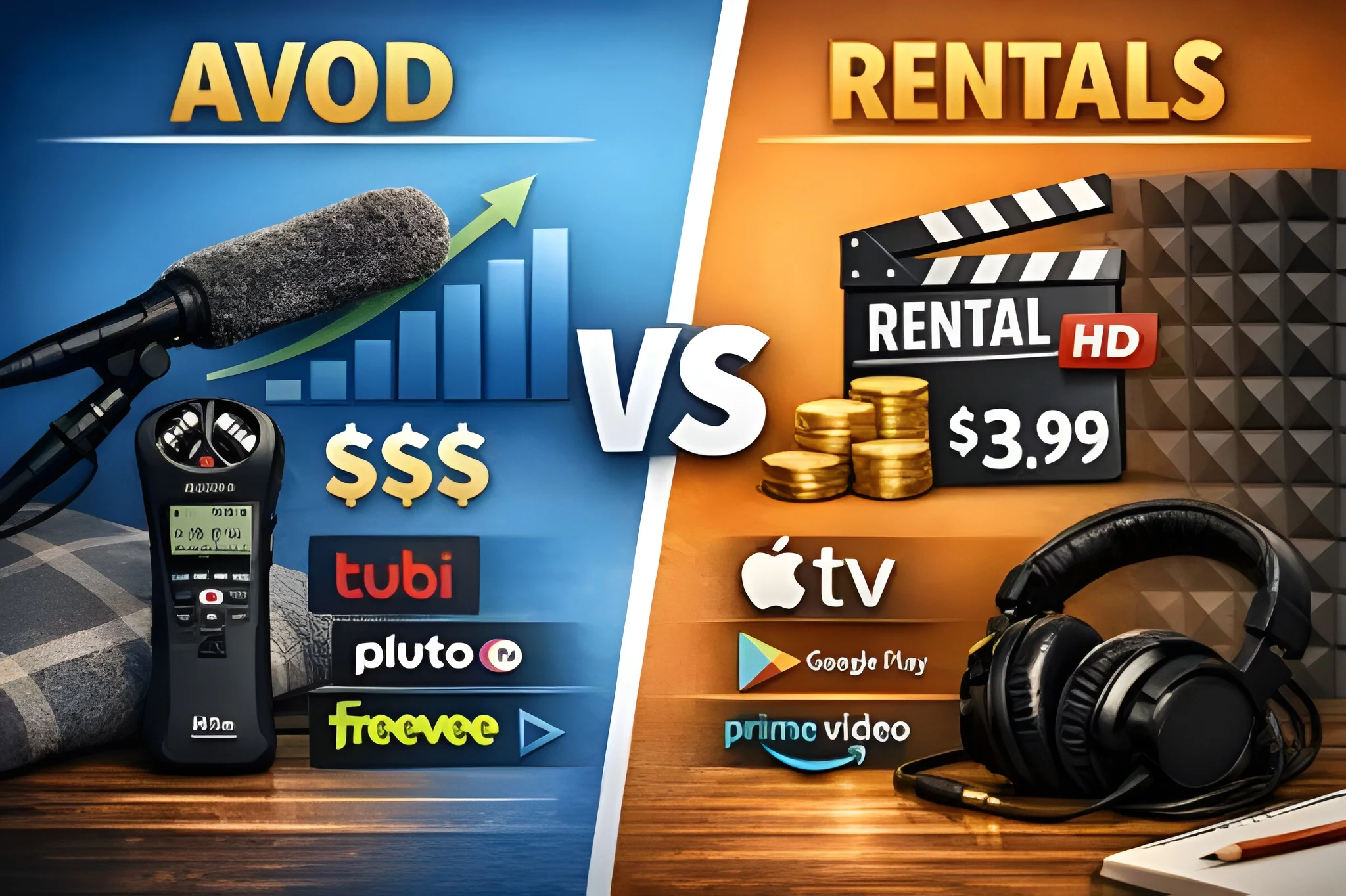
AVOD is the free‑to‑watch model — platforms like
Tubi,
Pluto TV, and
Freevee make money through ads. You earn a share of that ad revenue based on watch time, completion rates, and ad impressions.
TVOD, on the other hand, is the pay‑per‑view model —
Apple TV,
Google Play, and
Amazon Rentals charge viewers per title, and you get a cut of each transaction. It’s direct, clean, and performance‑based.
Both models can coexist in your release strategy, but they pay in radically different ways.
💰 2. What the Numbers Look Like in 2026
According to recent industry analyses, the
global AVOD market is worth roughly
$49.6 billion in 2026, growing at about
8 percent annually. North America still leads in total ad revenue, while Asia‑Pacific is the fastest‑growing region thanks to mobile‑first viewing and 5G expansion.
Mordor Intelligence
For filmmakers, that translates to
roughly $0.005–$0.02 per view, depending on the platform, territory, and ad density. A film that racks up a million views might earn
$5,000–$20,000 before distributor fees. It’s volume‑driven — the more eyeballs, the better.
By contrast,
TVOD rentals typically pay
70–85 percent of the rental price to the rights holder. If your film rents for $3.99, you might see $2.80–$3.40 per transaction. But the catch is scale — far fewer people rent than stream for free. A film that sells 10,000 rentals might earn $30,000, while an AVOD title with 1 million views could make half that.
Vitrina
📊 3. Why AVOD Is Growing Faster
Audiences are tired of subscription stacking. They want free access, and advertisers are happy to pay for it. Platforms are now using
AI‑driven ad insertion to target viewers more precisely, which increases CPM (cost per thousand impressions) and boosts filmmaker payouts.
digitalguruservice.com
For indie films, AVOD offers
long‑tail monetization — your movie keeps earning as long as people keep watching. Rentals spike early and fade fast; AVOD builds slowly but steadily.
🧾 4. The Filmmaker’s Cut: What You Actually Take Home
Here’s the sobering part: after distributor fees (10–25 percent), aggregator costs, and taxes, your net AVOD payout might be
60–70 percent of gross ad revenue. TVOD deals are cleaner but still subject to platform fees and payment delays.
In practice, a well‑performing indie film might earn:
- AVOD: $10,000–$25,000 over 12 months
- TVOD: $20,000–$40,000 in the first 3 months
But AVOD keeps paying long after TVOD dries up. It’s the slow burn versus the opening weekend.
🎥 5. The Smart Strategy: Hybrid Distribution
The most successful indie producers in 2026 use
hybrid release windows — starting with TVOD for early revenue, then moving to AVOD for long‑term reach. This mirrors the broader “windowing” strategy across theatrical, SVOD, and free streaming.
toolsforfilm.com
Think of it like this:
- TVOD = short‑term cash flow
- AVOD = long‑term audience growth
The combination gives you both visibility and sustainability.
🎬 Final Take
Movies don’t make money the way they used to — they make it in layers. Rentals deliver quick returns; AVOD builds residuals. For indie filmmakers, the smartest play is to treat streaming like a portfolio: stack models, diversify platforms, and keep your film alive across multiple windows.
In 2026, the filmmakers who win aren’t chasing one big check — they’re building a steady stream of small ones that never stop flowing.

Leave a comment